 ultimate-guide
What Makes a Truck Heavy Duty? Classes and GVWR Explained
Table of Contents
- What Makes a Truck Heavy Duty?
- Truck Weight Classes: Class 1 Through Class 8
- GVWR Meaning and How It Differs From Curb Weight and Payload
- Heavy-Duty vs Light-Duty Trucks: Where the Line Falls
- Heavy-Duty Pickups vs Class 7 and Class 8 Commercial Trucks
- Truck Towing Capacity and Payload: Reading the Ratings Correctly
- Licensing, Registration, and Operating Rules Above 26,000 Pounds
- Conclusion
- Frequently Asked Questions
Last Updated: October 20, 2026
What Makes a Truck Heavy Duty?
What makes a truck heavy duty is a gross vehicle weight rating, or GVWR, that exceeds the limits set for light- and medium-duty classes, with a reinforced frame, larger brakes, and a cooling system built for sustained heavy loads. At Extreme Sport Chassis, we explain this distinction to buyers every week, because the term "heavy duty" gets used loosely in truck marketing and the practical consequences are real. The exact definition matters for what you can legally haul, how the truck holds up under load, and what license and registration rules apply. Below, we break down the mechanical differences, the Class 1 through Class 8 system, and where heavy-duty pickups stop and commercial trucks begin.
The Frame, Brakes, and Cooling That Set Heavy Duty Apart
Three systems separate a heavy-duty truck from a light-duty one: the frame, the brakes, and the cooling system. A heavy frame uses thicker, higher-strength steel and more crossmembers to resist flexing under load. Larger brakes with more swept area and better heat dissipation handle repeated stops with a trailer attached. A bigger cooling system, including a larger radiator and transmission cooler, keeps engine and drivetrain temperatures stable during long climbs and sustained towing. Engine power and torque ratings rise alongside these components. A common mistake is assuming a powerful engine alone makes a truck heavy duty; in practice, the frame and braking hardware decide what the truck can safely control, not just pull.
Truck Weight Classes: Class 1 Through Class 8
Truck weight classes range from Class 1 through Class 8, defined by GVWR, the maximum total weight of the vehicle plus its load, passengers, and fluids. The system comes from Federal Highway Administration vehicle size and weight guidance, and it gives buyers a common language for comparing trucks across makes. The thresholds below follow the federal classification used for highway funding and regulation; individual states and manufacturers may apply slightly different breakpoints, so always confirm against the door jamb sticker and your state motor vehicle agency.
| Class | GVWR Range | Common Examples |
|---|---|---|
| Class 1 | 0-6,000 lb | Small pickups, minivans, light SUVs |
| Class 2 | 6,001-10,000 lb | Half-ton pickups, full-size vans |
| Class 3 | 10,001-14,000 lb | Three-quarter and one-ton pickups, chassis cabs |
| Class 4 | 14,001-16,000 lb | Large box trucks, walk-in vans |
| Class 5 | 16,001-19,500 lb | Bucket trucks, larger box trucks |
| Class 6 | 19,501-26,000 lb | Beverage trucks, rack trucks, school buses |
| Class 7 | 26,001-33,000 lb | Refuse trucks, city tractors, heavy dump trucks |
| Class 8 | Above 33,000 lb | Semi-tractors, dump trucks, heavy haul |
Classes 1 through 3 cover light-duty pickups and vans. Classes 4 through 6 cover medium-duty work trucks like box trucks and larger chassis cabs. Classes 7 and 8 cover heavy-duty commercial vehicles, including tractor-trailers and heavy vocational trucks. Knowing which class a truck falls into tells you far more about its capability than the badge on the tailgate.
The 26,000-pound line between Class 6 and Class 7 is the most consequential breakpoint in the entire system. It is the threshold most states use to separate vehicles that can be driven on a standard license from those that may require a commercial driver's license or a non-commercial Class A or B endorsement. That single number affects licensing, registration, inspection, and insurance, which is why it deserves more attention than the marketing labels on the tailgate.
GVWR Meaning and How It Differs From Curb Weight and Payload
GVWR meaning is straightforward: it is the maximum weight a fully loaded vehicle is rated to carry, set by the manufacturer and printed on the door jamb sticker. It is not the same as curb weight, which is the truck's weight with fluids and no cargo. Payload capacity is the difference between GVWR and curb weight, the weight of cargo and passengers you can add. Towing capacity is separate again, covering the weight of a trailer and its contents. The thing nobody tells you about these ratings is that they interact: load up the bed and tongue weight, and your available payload drops even if you are under the towing limit. Read all three numbers together.
Here is how the numbers actually work in practice. Suppose a one-ton dually pickup has a GVWR of 14,000 lb and a curb weight of 8,000 lb. Its payload capacity is 6,000 lb. Now add a 15,000-lb gooseneck trailer with a 15 percent tongue weight of 2,250 lb, two passengers at 400 lb total, and 500 lb of tools in the bed. That is 3,150 lb of load on the truck, leaving 2,850 lb of payload headroom. The truck is still under its payload rating, but if you add a heavier trailer or more gear, you cross the payload limit long before you reach the towing limit.
GVWR is also a regulatory number, not just a marketing one. The manufacturer certifies it, and regulators use it to determine which licensing, registration, inspection, and operating rules apply. That is why you should never treat GVWR as a target to exceed; it is a legal ceiling as well as a mechanical one. Curb weight, by contrast, is a measured value that varies with fuel level, options, and accessories, which is why the payload figure on the sticker is more reliable than one you calculate from a brochure.
Heavy-Duty vs Light-Duty Trucks: Where the Line Falls
The heavy-duty vs light-duty trucks line falls at GVWR and duty cycle, not at marketing labels. Light-duty trucks, generally Class 1 through Class 3, are built for occasional hauling, daily driving, and lighter trailers. Heavy-duty trucks in the commercial sense start at Class 7 and above, with GVWR over 26,000 pounds. Between them sit medium-duty trucks for consistent vocational work. A one-ton pickup sits in Class 3 and is often called "heavy duty" by pickup shoppers, but it is not a heavy-duty commercial truck by weight class. That naming overlap confuses buyers constantly. The distinction matters most when you cross into licensing and operating rules.
Heavy-Duty Pickups vs Class 7 and Class 8 Commercial Trucks
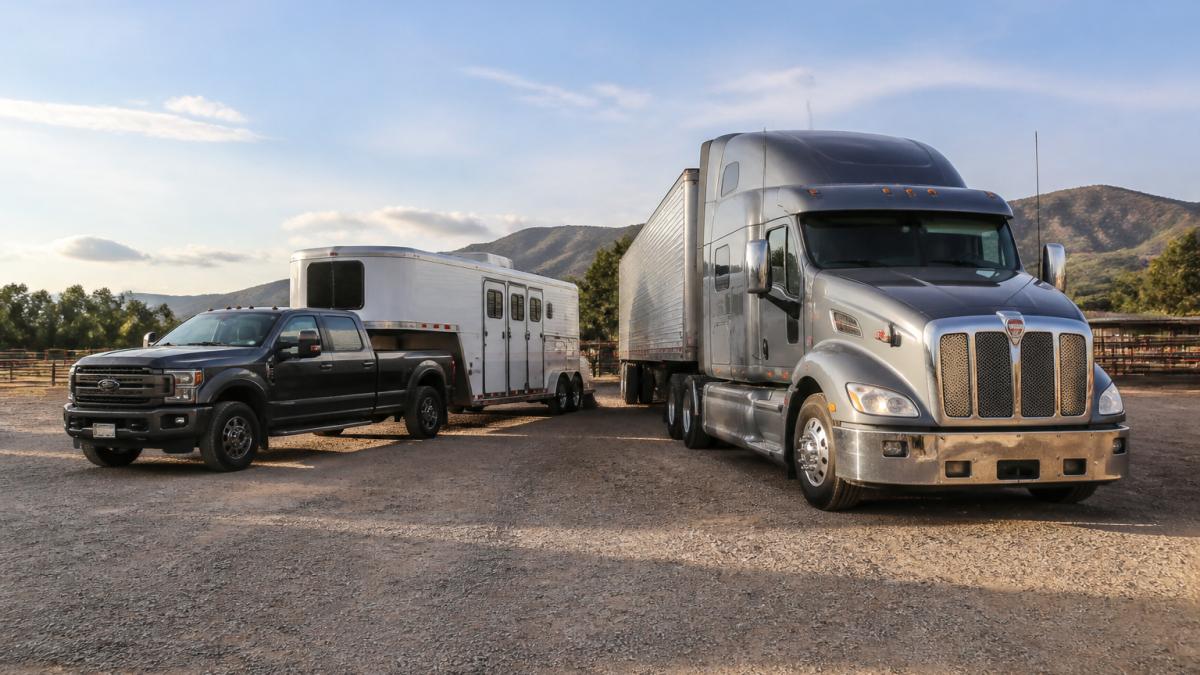
A heavy-duty pickup and a Class 7 or Class 8 commercial truck are different tools built for different jobs, even though both get called heavy duty. A heavy-duty pickup, such as a one-ton dually, is engineered for towing RVs, boats, and horse trailers while remaining comfortable as a daily driver. A Class 8 tractor-trailer is built around a much heavier frame, air brakes, and a duty cycle measured in hundreds of thousands of miles of freight hauling. At Extreme Sport Chassis, we build and sell trucks for the first group: buyers who need serious towing and hauling capacity without giving up interior comfort or daily usability. If your work is moving freight commercially, you need the commercial class. If it is towing a trailer on weekends and hauling equipment during the week, a properly spec'd heavy-duty pickup is the right fit.
Truck Towing Capacity and Payload: Reading the Ratings Correctly
Truck towing capacity and payload ratings only work if you read them together. Towing capacity is the maximum weight of a trailer the truck is rated to pull, and it assumes a base vehicle with a driver and no extra cargo. Payload capacity is what you can put in the truck itself, including passengers, tools, and trailer tongue weight. Add a heavy trailer tongue weight and a loaded bed, and you can exceed payload long before you hit the towing limit. A common approach is to calculate your real-world load before you shop: trailer weight plus tongue weight plus passengers plus gear. If that total pushes past the payload rating, step up to a heavier truck.
Licensing, Registration, and Operating Rules Above 26,000 Pounds
Operating rules change once a truck's GVWR crosses 26,000 pounds. Vehicles at or below that threshold generally fall under standard driver licensing and registration for personal or light commercial use. Above 26,000 pounds, many states require a commercial driver's license or a specific non-commercial class for the vehicle, and registration, inspection, and insurance requirements shift. The exact thresholds vary by state, so confirm the rules with your state's motor vehicle agency before you buy. The FMCSA commercial vehicle overview outlines federal commercial operating requirements, and your state agency fills in the rest. This is the practical reason the 26,000-pound line matters so much: it decides who can legally drive the truck.
Conclusion
Choosing the right truck comes down to matching GVWR, payload, and operating rules to how you will actually use the vehicle, not to a badge or a horsepower figure. Extreme Sport Chassis specializes in high-performance SportChassis trucks that combine heavy-duty towing and hauling capability with luxury comfort, plus a wide selection of cars, SUVs, and Jeeps. Our locally owned team offers personalized, custom solutions and expert advice on vehicle selection so you get a truck built for your specific needs and budget. View All Inventory to find the right fit.
Frequently Asked Questions
What makes a pickup truck heavy duty?
A heavy-duty pickup is built on a reinforced frame with stronger axles, larger brakes, and a cooling system sized for sustained load. In weight-class terms, most heavy-duty pickups land in Class 2b and Class 3, with gross vehicle weight ratings from roughly 8,500 to 14,000 pounds. That construction is what lets them carry heavier payloads and tow trailers that would overwhelm a light-duty truck. The badge on the fender matters less than the ratings on the door jamb sticker.
What does GVWR mean on a truck?
GVWR stands for gross vehicle weight rating: the maximum total weight of the truck plus everything in it and on it, set by the manufacturer. It is not the truck's actual weight. Curb weight is what the truck weighs empty, and payload is GVWR minus curb weight. Towing capacity is a separate rating for the trailer. Reading all four numbers together tells you what a truck can legally and safely handle, and GVWR is also the number that determines which truck weight class a vehicle falls into.
What truck classes are considered heavy duty?
Class 7 and Class 8 are the heavy-duty commercial classes, covering gross vehicle weight ratings from 26,001 pounds upward. Class 7 includes trucks like larger box trucks and refuse haulers, while Class 8 covers tractor-trailers and heavy dump trucks. Class 6, from 19,501 to 26,000 pounds, is often called medium duty. Heavy-duty pickups are a separate category: they sit in Class 2b and Class 3 but share the reinforced frame, brake, and cooling hardware that defines heavy-duty construction.
Does a higher towing capacity make a truck heavy duty?
No. Towing capacity is one rating, and it can be inflated by axle ratio, engine choice, and optional tow packages on trucks that are otherwise light duty. What makes a truck heavy duty is the underlying structure: frame thickness, axle strength, brake size, and cooling capacity. A truck with a high tow rating but light-duty brakes and suspension will still struggle with a heavy trailer on a long grade. Check GVWR and payload first, then confirm the towing capacity for your specific configuration.
Extreme Sport Chassis is a locally owned dealership offering high-performance SportChassis trucks, cars, SUVs, and Jeeps, with personalized service and custom solutions tailored to how you tow, haul, and drive.