 how-to
How to Plan Custom Truck Builds for Horse Trailers
Last Updated: October 25, 2026
Quick Summary
Custom truck builds start with the loaded horse trailer weight and work backward to the truck, matching GVWR, GCWR, and axle ratings before any bed or hitch is designed. This prevents the squat, vague steering, and brake fade that stock pickups show once a loaded trailer is behind them.
- A common planning figure is roughly 1,100 to 1,300 lb per adult horse, but weigh your horses on a scale.
- A gooseneck puts roughly 15 to 25 percent of loaded weight on the hitch as pin weight.
- A setup only works when GVWR, GCWR, rear axle rating, and front axle rating all pass.
- Dual rear wheels improve stability but widen the turning circle and cost more at tire replacement.
- Extreme Sport Chassis has been in business since 1987 and has spent the last 20 years building luxury haulers.
Table of Contents
- Why Custom Truck Builds Beat Off-the-Lot Pickups for Hauling
- Matching Horse Trailer Towing Capacity to Your Truck
- When a Dually Truck for Horse Trailer Duty Makes Sense
- Choosing a Gooseneck Horse Trailer Truck Setup
- Hauler Beds, Truck Conversions, and Living Quarters: Build Options Compared
- Safety Checks, Legal Requirements, and the Build Process
- What to Ignore When Planning a Custom Build
- Start Your Build With Extreme Sport Chassis
- Frequently Asked Questions
Why Custom Truck Builds Beat Off-the-Lot Pickups for Hauling
The horse transport truck market was valued at $2.8 billion in 2025 and is projected to reach $4.6 billion by 2034, according to Dataintelo's horse transport truck market research. That growth tracks a simple reality: a stock pickup bought off a dealer lot is engineered for the average buyer, not for the person pulling a loaded horse trailer through mountain grades every weekend. Custom truck builds solve that mismatch by starting with the tow rig you actually need.
At Extreme Sport Chassis, we have watched this shift firsthand. Buyers who start with a factory truck often end up spending more on aftermarket fixes than they would have on a purpose-built hauler.
Where Stock Trucks Fall Short
A factory half-ton or three-quarter-ton pickup is a compromise. Its suspension is tuned for an empty bed, its brakes are sized for the truck alone, and its interior is built to a price. Add a loaded horse trailer and the weaknesses show up fast: squat, vague steering, and brake fade on long descents.
What a Purpose-Built Hauler Adds
A purpose-built hauler starts with heavy-duty running gear and works outward. That means a reinforced frame, commercial-grade braking, and a bed designed around a gooseneck or fifth-wheel hitch rather than bolted onto a generic cargo box. The result is a truck that behaves the same loaded as it does empty.
If you are still weighing custom against stock, our custom pickup buyer's guide walks through the full decision.
Matching Horse Trailer Towing Capacity to Your Truck
Horse trailer towing capacity is the maximum loaded weight a truck can pull safely, and it must account for the trailer, the horses, tack, water, and gear combined. Most towing mistakes trace back to one number: the driver compared the trailer's dry weight to the truck's rating and called it done. The fix is a repeatable matching workflow that runs from the loaded trailer backward to the truck spec.
Step 1: Build the Loaded Trailer Weight
Start with the trailer's dry weight from its specification plate, then add every load the rig will actually carry:
- Horses. A common planning figure is roughly 1,100 to 1,300 lb per adult horse, but weigh your horses on a scale rather than guessing.
- Water. Fresh water weighs about 8.3 lb per gallon, so a 50-gallon tank adds roughly 415 lb when full.
- Hay, tack, and gear. Feed, saddles, and equipment add up faster than most owners expect.
The result is your loaded trailer weight. Use that number everywhere below, never the dry weight.
Step 2: Separate Tongue or Pin Weight From Trailer Weight
A gooseneck or fifth-wheel trailer puts roughly 15 to 25 percent of its loaded weight on the hitch as pin weight; a bumper-pull trailer puts roughly 10 to 15 percent on the ball as tongue weight. That weight lands on the truck's rear axle and counts against the truck's payload and rear axle rating, not just its towing rating. A 12,000 lb loaded gooseneck at 20 percent pin weight puts about 2,400 lb on the truck before a single passenger climbs in.
Step 3: Check the Truck Against Four Ratings
- GVWR is the most the truck itself can weigh, including passengers, fuel, pin weight, and payload.
- GCWR is the most the truck and loaded trailer can weigh together.
- Rear axle rating (RAWR) caps how much weight the rear axle can carry, which is where pin or tongue weight lands.
A setup only works when all four pass. Passing GCWR while blowing past the rear axle rating is still an overloaded truck.
Step 4: Subtract Payload for People and Gear
Payload is GVWR minus the truck's curb weight. Pin weight, passengers, fuel, tools, and anything in the bed all draw from that same pool. A crew cab with four adults and a loaded toolbox can eat 800 lb or more of payload before the trailer is even hitched.
Step 5: Confirm the Hitch and Trailer Ratings
The hitch, ball, and trailer coupler each carry their own weight rating, and the lowest rating in the chain governs. A truck rated to pull 20,000 lb behind a hitch rated for 16,000 lb is a 16,000 lb setup.
Purdue University Extension explains safe attachment of a livestock trailer to a truck and stresses that the whole rig, not just the trailer, has to be matched. For a deeper explainer on how these ratings work, see what makes a truck heavy duty.
When a Dually Truck for Horse Trailer Duty Makes Sense
A dually truck for horse trailer duty makes sense when trailer weight and pin weight climb past what a single rear wheel setup handles comfortably.
The trade-off is real. Dual rear wheels widen the turning circle, cost more at tire replacement time, and make tight parking lots a chore. For a two-horse bumper-pull trailer on weekend trips, a properly spec'd single rear wheel truck often does the job.
Choosing a Gooseneck Horse Trailer Truck Setup
A gooseneck horse trailer truck setup places the hitch ball over the rear axle, which puts pin weight directly on the truck's strongest load path.
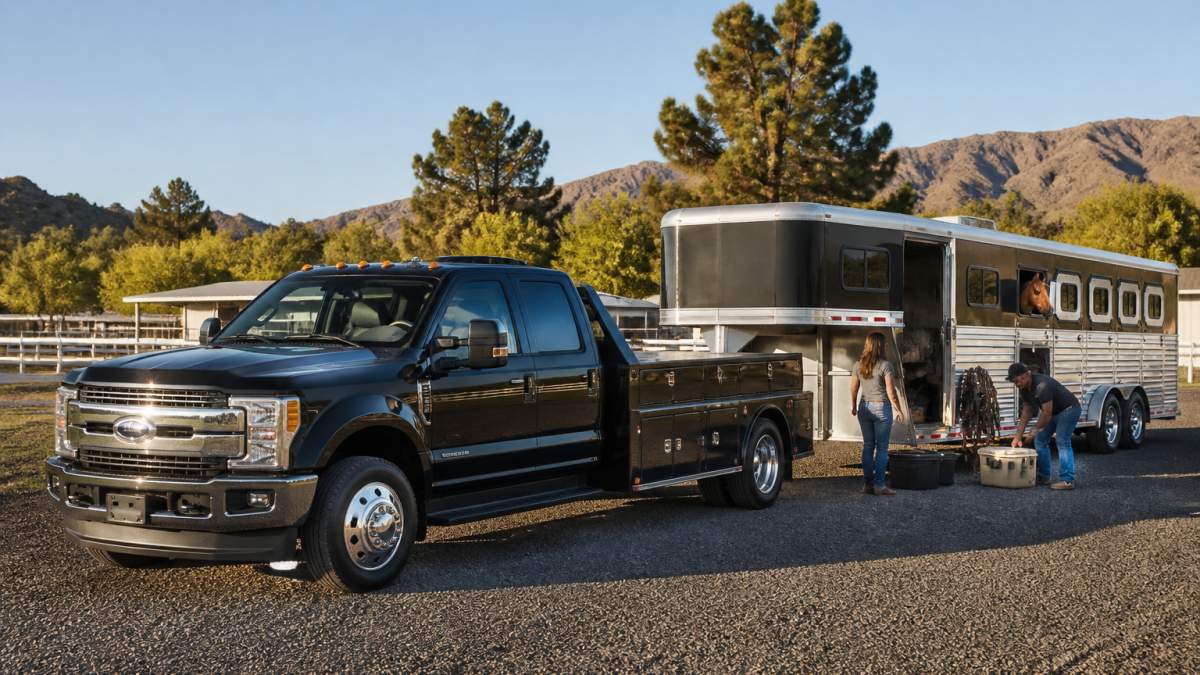
The hitch itself has to match the truck. A gooseneck ball mounted in a bed that was not reinforced for it will flex, and flex leads to cracked mounting points.
Hauler Beds, Truck Conversions, and Living Quarters: Build Options Compared
Build options range from a bolt-on hauler bed to a full truck conversion with living quarters. Choosing among them comes down to how you use the truck when it is not towing.
| Option | What It Adds | Best For | Watch Out For |
|---|---|---|---|
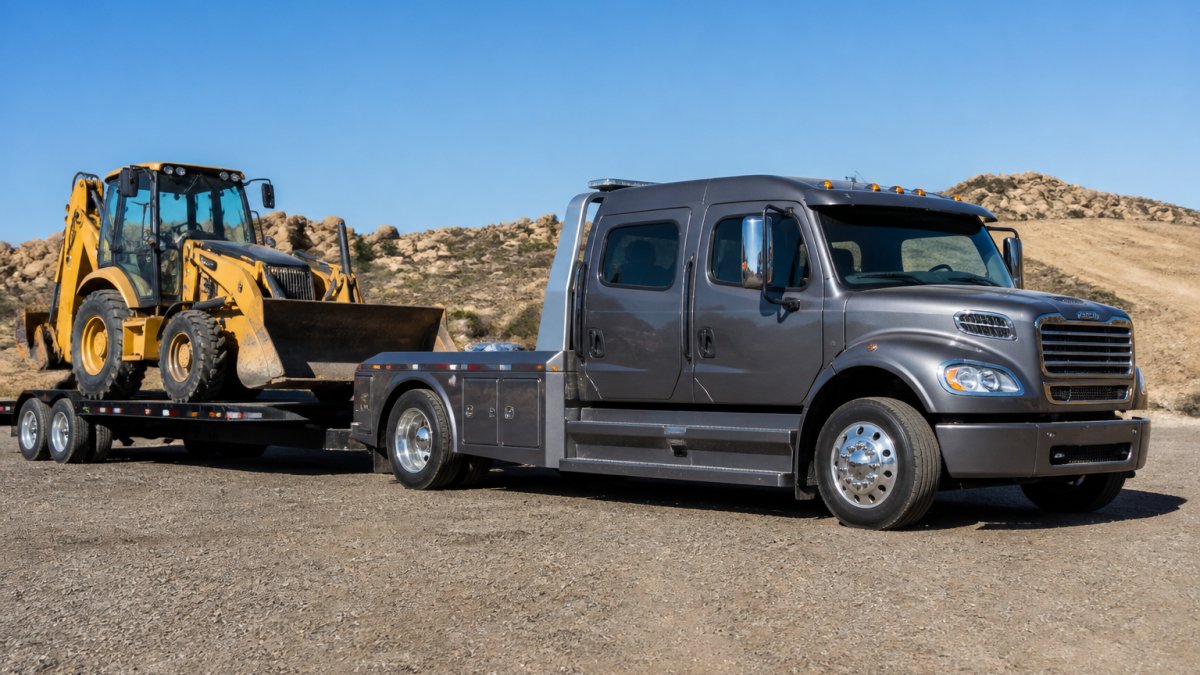
| Hauler bed | Flat, reinforced deck with integrated hitch and storage | Towing-focused buyers who want cargo flexibility | Less weather protection for gear |
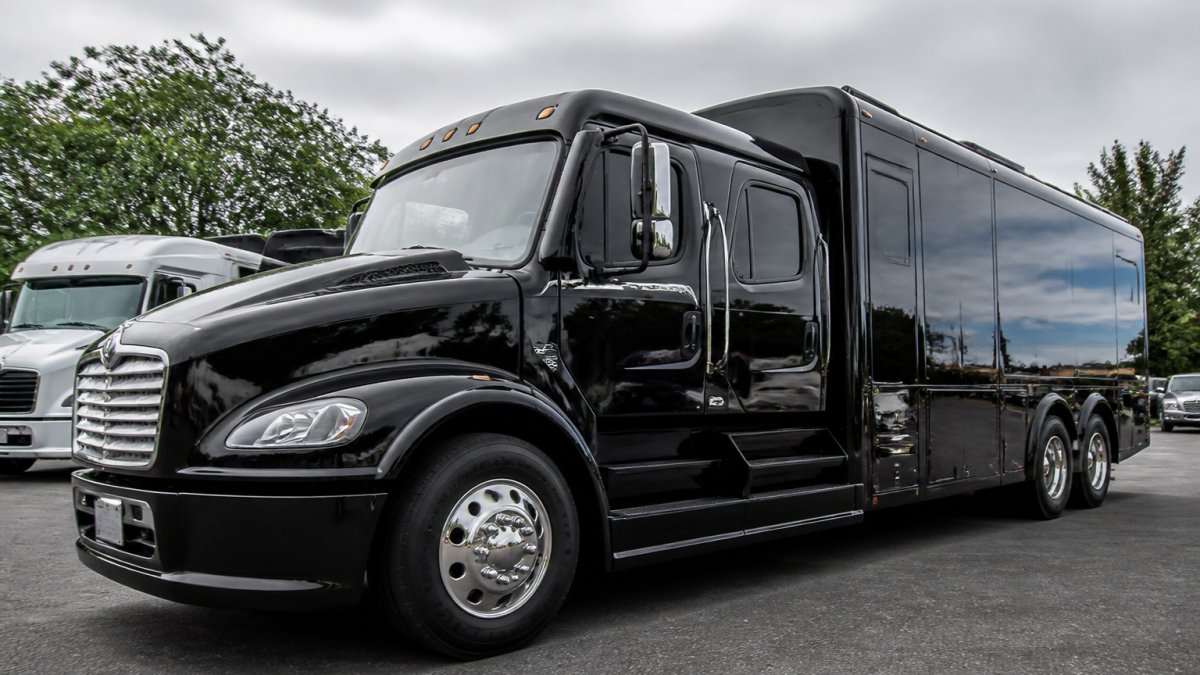
| Truck conversion | Rebuilt rear section with luxury interior and custom layout | Buyers who want daily-driver comfort | Higher complexity, longer build time |
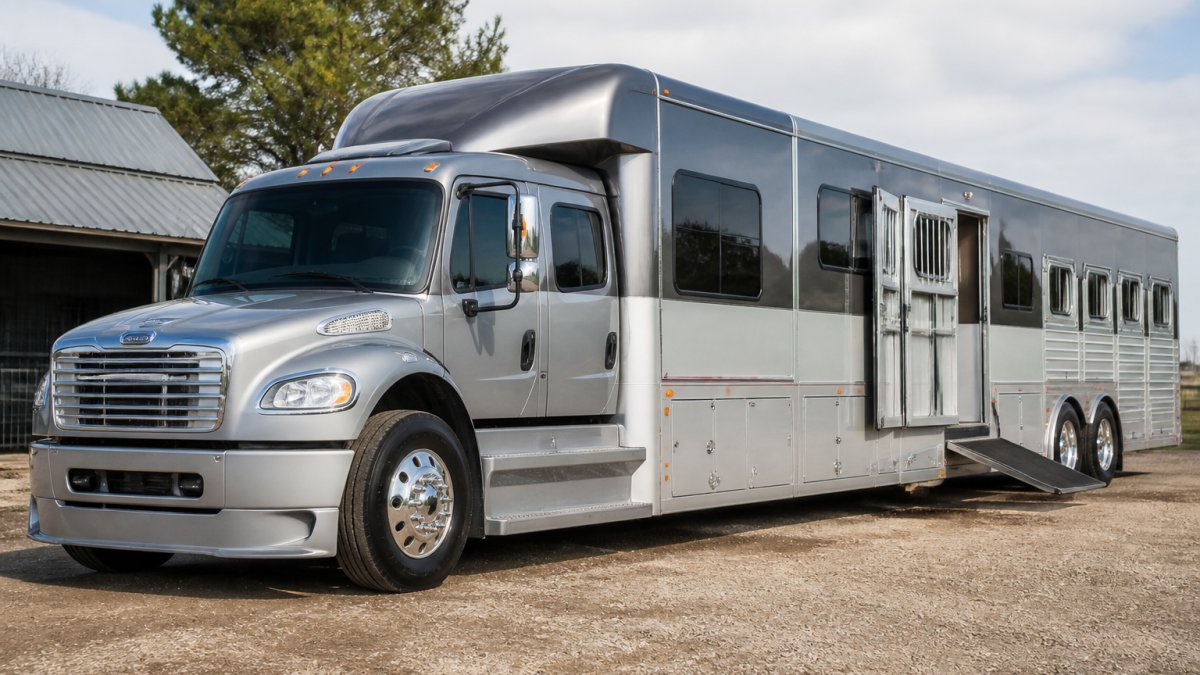
| Living quarters | Sleeping, kitchen, and bathroom integrated with the rig | Long-distance hauling and overnight trips | Added weight counts against GCWR |
| Aluminum construction | Lighter body panels and bed structures | Buyers chasing payload headroom | Repair costs run higher than steel |
Aluminum construction reduces weight, which frees up payload capacity for horses and gear. The catch is that aluminum repairs cost more and require a shop that knows the material.
Safety Checks, Legal Requirements, and the Build Process
Safety and legality come down to documented weight ratings, functioning brakes on every axle, and a hitch rated for the load. Federal rules govern lighting, braking, and securement for trailers, and states add registration and inspection requirements on top. Confirm the rules that apply to your setup before you tow.
What the Pre-Delivery Inspection Should Verify
A proper inspection is not a walkaround. It checks the systems that fail under load:
- Brakes. Every trailer axle should have working brakes, and the trailer brake controller should be set so the trailer pulls slightly against the truck rather than pushing it. Test at low speed on a dry surface before any highway trip.
- Hitch and safety chains. Confirm the ball or pin is fully seated, the coupler is latched, and safety chains are crossed and rated for the load.
- Tires and inflation. Check cold inflation against the tire placard, confirm load range matches the axle rating, and look for sidewall cracking on trailers that sit between trips.
Legal Requirements to Confirm Before Towing
Requirements vary by state, but the categories are consistent:
- Registration and titling for both truck and trailer, with the trailer registered at its loaded weight class.
- Weight ratings on the vehicle. GVWR and axle ratings are set by the manufacturer and cannot be legally exceeded by aftermarket upgrades alone.
- Trailer brake and lighting rules. Most states require brakes on trailers above a set weight threshold and mandate specific lighting and reflector configurations.
The Build Process, Stage by Stage
The build process itself runs in stages:
- Define the load. Trailer weight, horse count, water capacity, and travel plans.
- Spec the truck. Match GVWR, GCWR, and axle ratings to the loaded trailer from Step 1 of the matching workflow.
- Design the bed, hitch, and storage as one system. Hitch placement, reinforcement, and storage layout are decided together, not bolted on later.
- Fabricate and assemble. Frame reinforcement, bed mounting, wiring, and interior are completed in sequence.
- Inspect under load. Brakes, lights, suspension, hitch, and weight distribution are verified with the trailer loaded before delivery.
A common mistake is skipping step two and letting the bed design drive the truck spec. That is backwards. For quick answers on requirements and process, our frequently asked questions cover the details buyers ask about most.
What to Ignore When Planning a Custom Build
Ignore anyone who tells you to pick the truck first and figure out the trailer later. The trailer and its loaded weight set every downstream decision, from axle ratings to hitch placement to brake sizing.
Also ignore the urge to treat a build as a do-it-yourself project. Double D Trailers warns that building a horse trailer yourself is not recommended because of design and construction concerns that affect safety.
Two more things to skip:
- Cosmetic upgrades before the weight math is settled.
- Aftermarket parts chosen without checking how they interact with the rest of the build.
Start Your Build With Extreme Sport Chassis
Here is the challenge most buyers run into: the truck that tows well rarely drives well, and the truck that drives well rarely tows well. We built our business on closing that gap. Extreme Sport Chassis has been in business since 1987 and has spent the last 20 years building luxury haulers, and SportChassis is rated in J.D.
When you are ready, browse the Sport Chassis for sale or start a credit application to move your build forward.
Frequently Asked Questions
What kind of truck do you need to pull a horse trailer?
You need a truck whose ratings cover the loaded trailer, not just the empty one. Check the gross vehicle weight rating, gross combined weight rating, and axle ratings against the trailer's loaded weight plus tack, water, and horses. A two-horse bumper pull and a five-horse gooseneck demand very different trucks. Purdue University Extension notes that safe attachment of a livestock trailer to the truck is part of the rig, so the hitch, bed, and truck should be planned together rather than bought separately.
Is a dually truck for horse trailer duty really better than a single-rear-wheel truck?
A dually truck for horse trailer work adds two more rear tires, which raises rear axle capacity and spreads load across a wider footprint. That extra stability helps with tall gooseneck trailers and crosswinds on long-distance hauling. The trade-off is width in tight parking lots and slightly higher tire costs. For lighter two-horse trailers on short trips, a properly rated single-rear-wheel truck can work. Match the configuration to your loaded weight, not to habit.
Can a custom hauler truck tow a gooseneck horse trailer?
Yes, and this is where custom truck builds earn their keep. A gooseneck horse trailer truck needs a bed designed around the hitch point, clearances for the neck, and a frame that handles the pin weight. A hauler bed with an integrated gooseneck hitch keeps the deck flat and the coupling accessible. Confirm the hitch rating, the bed structure, and the truck's payload capacity all support the loaded trailer before the build is finalized.
How do I check whether my truck can safely tow my loaded horse trailer?
Weigh the trailer loaded, including horses, tack, water, and fuel, then compare that number to the truck's towing capacity and gross combined weight rating. Check the rear axle rating against the pin or tongue weight plus cargo in the bed. Confirm the hitch and braking system are rated for the load. The horse transport truck market was valued at $2.8 billion in 2025 and is projected to reach $4.6 billion by 2034, per Dataintelo, so plenty of buyers are working through the same math.
The right custom truck builds for horse trailers start with honest weight math and end with a rig that tows and drives well. Get started with Extreme Sport Chassis and spec a hauler built around your trailer, your horses, and the way you actually drive.