 How-to
Can One Truck Handle Towing and Daily Driving?
Last Updated: October 30, 2026
Quick Summary
Balancing towing and daily driving means buying a truck engineered for both jobs, not a stock pickup with parts bolted on afterward. Match the truck to how often you actually tow, do the payload math before you buy, and keep loads balanced with the right hitch setup. A purpose-built luxury hauler keeps heavy-duty capability while staying comfortable on the Monday commute.
- Towing capacity and payload are separate limits, and the lower one always wins.
- The door-jamb sticker lists the payload limit for your exact truck build.
- Distribute trailer weight evenly, keeping heavier items low and over the axles.
- A weight distribution hitch spreads tongue weight across both truck axles.
- Run the full safety checklist every time you hook up, even for short hauls.
Table of Contents
- Start With the Truck: Finding the Best Truck for Towing and Daily Driving
- Truck Towing Capacity and Payload: Do the Math Before You Buy
- How to Balance a Trailer Load for Stable Highway Driving
- Hitch Setup, Weight Distribution, and Tongue Weight
- Handling, Braking, and Stability Under Load
- Your Towing Safety Checklist Before Every Trip
- Real-World Fuel, Maintenance, and Ownership Costs
- Test Drive a SportChassis Built for Both Jobs
- Frequently Asked Questions
Start With the Truck: Finding the Best Truck for Towing and Daily Driving
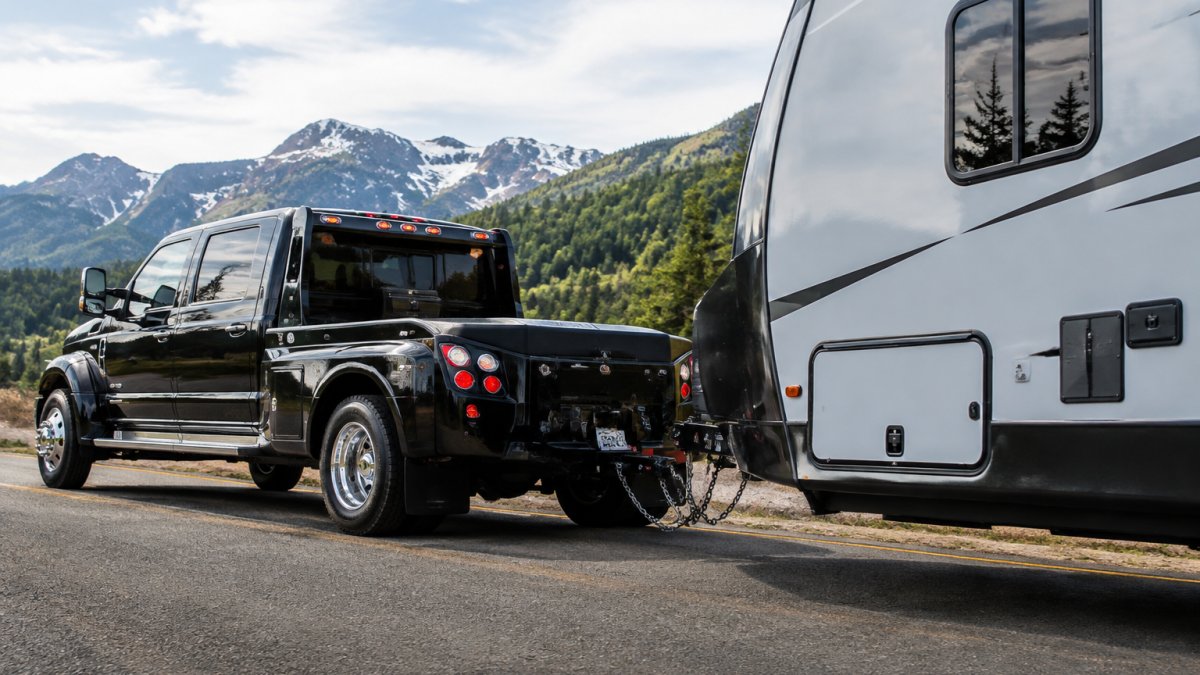
The best truck for towing and daily driving is one built for both jobs from the frame up, not a stock pickup with parts bolted on afterward.
Here's the core problem. Most trucks force a trade-off. Stiff suspension and heavy springs make a truck great under a trailer and miserable on a Monday commute.
Learning how to balance towing and daily driving starts with admitting that no single off-the-lot pickup does both well.
Match the Truck to How Often You Tow
Towing frequency changes everything. A driver who hooks up a horse trailer twice a month has different needs than a contractor hauling equipment five days a week.
Ask yourself three questions:
- How many days per week does a trailer sit behind the truck?
- What's the heaviest load, loaded and ready to roll?
- How many miles are you driving empty versus loaded?
If most of your miles are empty, comfort and fuel economy matter more. If most are loaded, stability and cooling capacity win. The mistake is buying for the rare worst-case trip and living with the compromise every other day.
Daily-Drive Compromises by Truck Type
Not every truck type carries the same daily-driving penalty. Here's how the common options stack up.
| Truck Type | Towing Strength | Daily-Drive Comfort | Best For |
|---|---|---|---|
| Half-ton pickup | Light to moderate | High | Occasional towing, mostly commuting |
| Three-quarter-ton | Moderate to heavy | Medium | Regular towing with some daily use |
| One-ton dually | Heavy | Low | Frequent heavy loads, long highway hauls |
| Custom luxury hauler | Heavy | High | Drivers who refuse to choose |
A stock one-ton dually tows almost anything. It also rides stiff, parks badly, and burns fuel empty. That's the compromise most buyers don't see until month two.
A purpose-built luxury hauler flips that math. That's the idea behind a SportChassis: real towing capability in a vehicle built for everyday comfort.
Truck Towing Capacity and Payload: Do the Math Before You Buy
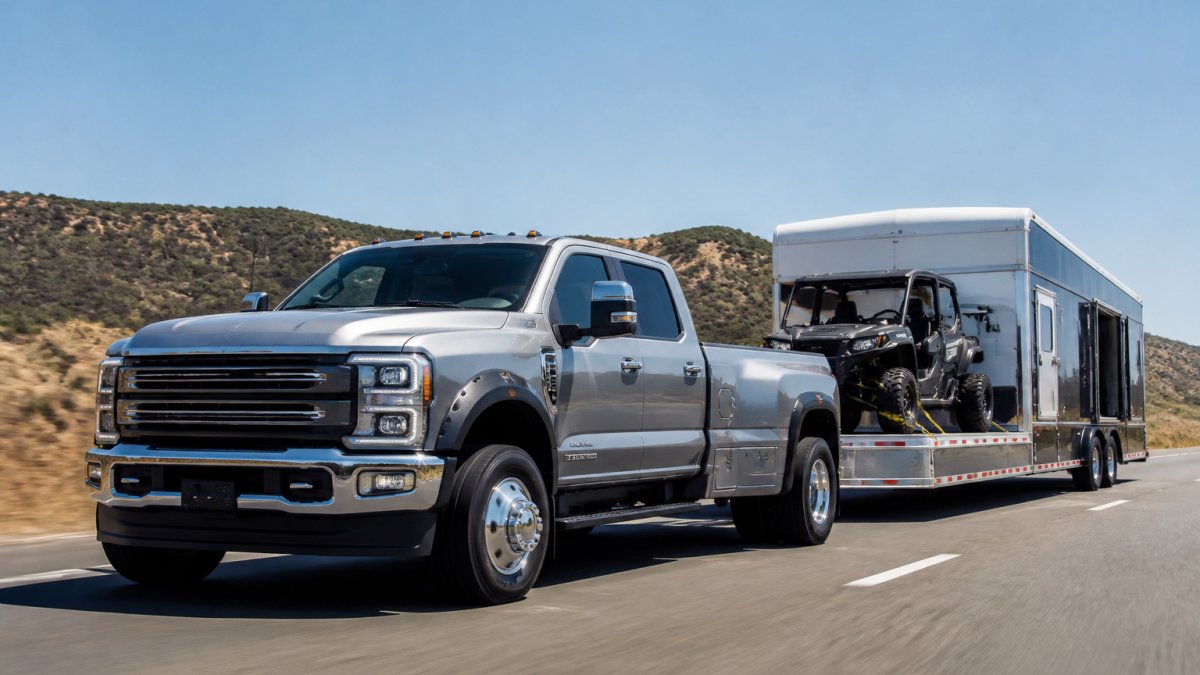
Truck towing capacity and payload are two different limits, and the lower one wins. Towing capacity is how much trailer weight the truck can pull. Payload is how much weight the truck itself can carry, including passengers, cargo, and tongue weight.
The real limit is often payload. Add up your passengers, gear, and the tongue weight of a loaded trailer, and a truck rated to "tow" a big number can run out of payload fast.
A Worked Payload Example
Here's how the math plays out on a typical three-quarter-ton pickup. These are illustrative figures, not a spec sheet for any one truck, always use your own door-jamb sticker.
- Payload rating on the sticker: 3,000 lb
- Two adults and two kids: 500 lb
- Tools, cooler, and cab cargo: 200 lb
Total consumed payload: 2,050 lb. Remaining margin: 950 lb. That sounds fine, until you add a generator, firewood, or a full water tank and watch the margin shrink. Swap in a heavier trailer at 14,000 lb and the same 12% tongue weight becomes 1,680 lb, leaving only 470 lb of margin before anyone sits down.
Reading the Door-Jamb Sticker
The door-jamb sticker is the only number that matters for your specific truck. It lists the gross vehicle weight rating (GVWR) and the payload limit for that exact build, with the options it left the factory with.
Here's how to use it:
- Find the payload figure on the sticker.
- Subtract the weight of every passenger and all cargo.
- Subtract the trailer's tongue weight.
- What's left is your real safety margin.
If that number is negative, the truck is overloaded before the trailer even moves. For a deeper walk-through of truck classes and ratings, see our guide on what makes a truck heavy duty.
Towing Frequency Changes the Math
How often you tow should shape which limit you protect. An occasional tower can run closer to the payload ceiling because most miles are empty. A frequent tower should leave a wider margin, because heat, wear, and long grades punish a truck that runs at its limit every trip. Terrain matters too: a rig that is fine on flat ground can struggle on a sustained climb, where cooling capacity and transmission temperature become the real constraint.
How to Balance a Trailer Load for Stable Highway Driving
To balance a trailer load, distribute weight evenly front to back and side to side, keeping heavier items low and centered over the axles. Poor balance is the number one cause of trailer sway and white-knuckle highway driving.
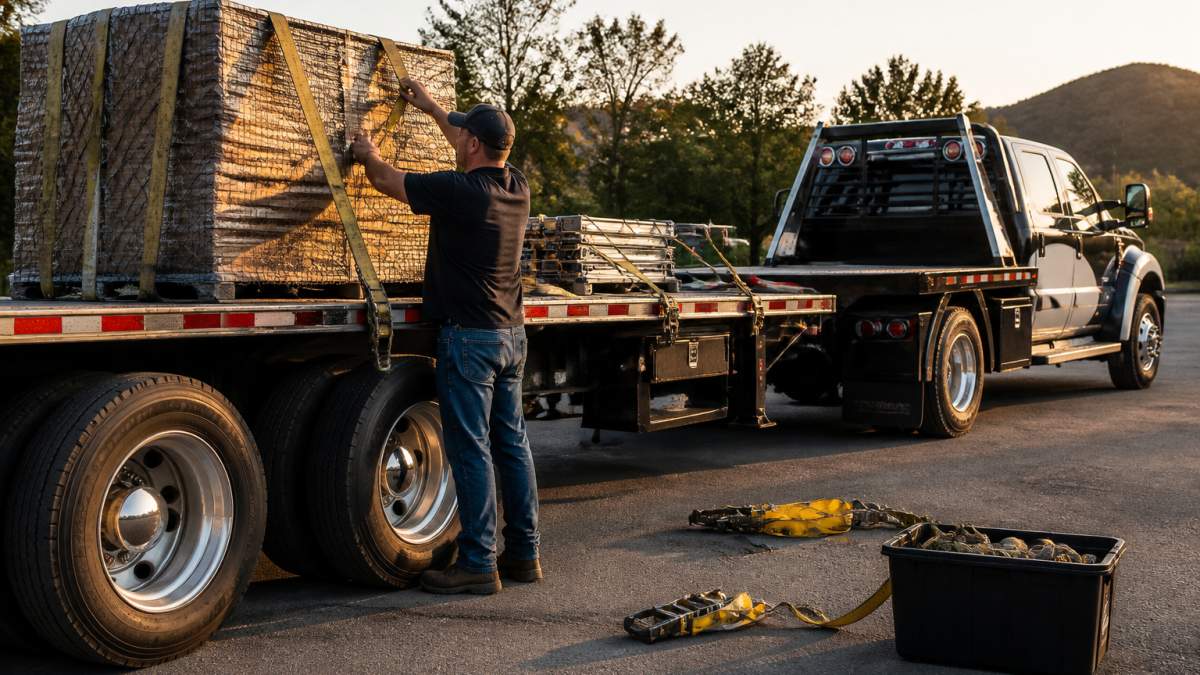
Load too much weight behind the trailer axles and the tail starts to wag. Load too much up front and the tongue weight crushes your rear suspension. Both ruin handling.
Front-to-Back and Side-to-Side Balance
Aim for slightly more weight ahead of the trailer axles than behind them. That keeps the tongue planted and the trailer tracking straight.
For side-to-side balance, split weight evenly across the width. An off-center load pushes one tire harder and makes the trailer pull to one side under braking.
- Put heavy items low and over the axles.
- Keep the load centered left to right.
- Secure everything so nothing shifts in transit.
If you're planning to haul a horse trailer, our guide on custom truck builds for horse trailers covers how to set up the truck for that specific load.
Hitch Setup, Weight Distribution, and Tongue Weight
Tongue weight is the downward force the loaded trailer puts on the hitch, and it's the number most drivers ignore. Too little and the trailer sways.
A weight distribution hitch spreads tongue weight across both truck axles instead of dumping it all on the rear.
Get the hitch setup right:
- Match the hitch and ball to the trailer's coupler rating.
- Set the weight distribution bars so the truck sits level.
- Confirm the trailer rides level, not nose-up or nose-down.
A common mistake is skipping the weight distribution hitch on a heavy load because the truck "seems fine." It isn't fine at 65 mph when a crosswind hits.
Handling, Braking, and Stability Under Load
Stability under load comes down to tires, suspension, and how the weight is distributed.
Braking changes most. Extra weight means longer stopping distances, so leave more room ahead and let the trailer's brakes do their share.
Traction matters too. Weight on the drive axle helps, but too much tongue weight lifts the front and cuts steering grip.
Highway driving exposes every weak point. Crosswinds, passing trucks, and rough pavement all test how well the rig stays planted.
Your Towing Safety Checklist Before Every Trip
A towing safety checklist catches the small problems before they become highway emergencies. Run through it every time you hook up, even for a short haul.
- Check tire pressure on truck and trailer, including the spare
- Confirm the hitch is locked and the pin is in place
- Attach and cross the safety chains
Watch out: skipping the light and brake test is the mistake that bites hardest. A dead trailer brake light or failed brake connection turns a routine stop into a dangerous one, and you won't know until you need it.
Real-World Fuel, Maintenance, and Ownership Costs
Fuel economy drops the moment you hook up a trailer, and it stays low until you unhitch. The size of the drop depends on trailer weight, frontal area, speed, and terrain. A common pattern is a meaningful loss in miles per gallon once a tall trailer is behind the truck, because aerodynamic drag rises sharply with speed. That is why towing at 65 mph instead of 75 mph often saves more fuel than any tuning change.
Loaded vs. Unloaded Costs
Think of ownership in two buckets: empty miles and loaded miles. Empty miles reward a truck with reasonable gearing, low rolling resistance, and a comfortable ride. Loaded miles reward cooling capacity, strong brakes, and a drivetrain that isn't straining. A truck optimized only for loaded miles usually pays for it on every commute. A truck optimized only for the commute usually pays for it on every long haul.
Maintenance runs higher with towing because heat and load accelerate wear. Watch these systems closely:
- Transmission fluid: towing raises fluid temperature, so follow the severe-duty interval in the owner's manual rather than the standard one.
- Brakes: trailer weight shortens pad and rotor life, and trailer brakes that are out of adjustment push more work onto the truck.
- Tires: load and heat increase wear, and tire pressure should be checked cold and adjusted for the load.
The One-Vehicle Math
The ownership math is simple. A truck that does both jobs means one vehicle to insure, register, and maintain instead of two. That offsets some of the higher running cost, and it saves the hassle of keeping a separate commuter. Insurance, registration, and parking for a second vehicle are real costs that don't show up on the fuel receipt.
What most buyers miss is resale and reliability.
Test Drive a SportChassis Built for Both Jobs
The only way to know a truck handles both jobs is to drive it loaded and empty.
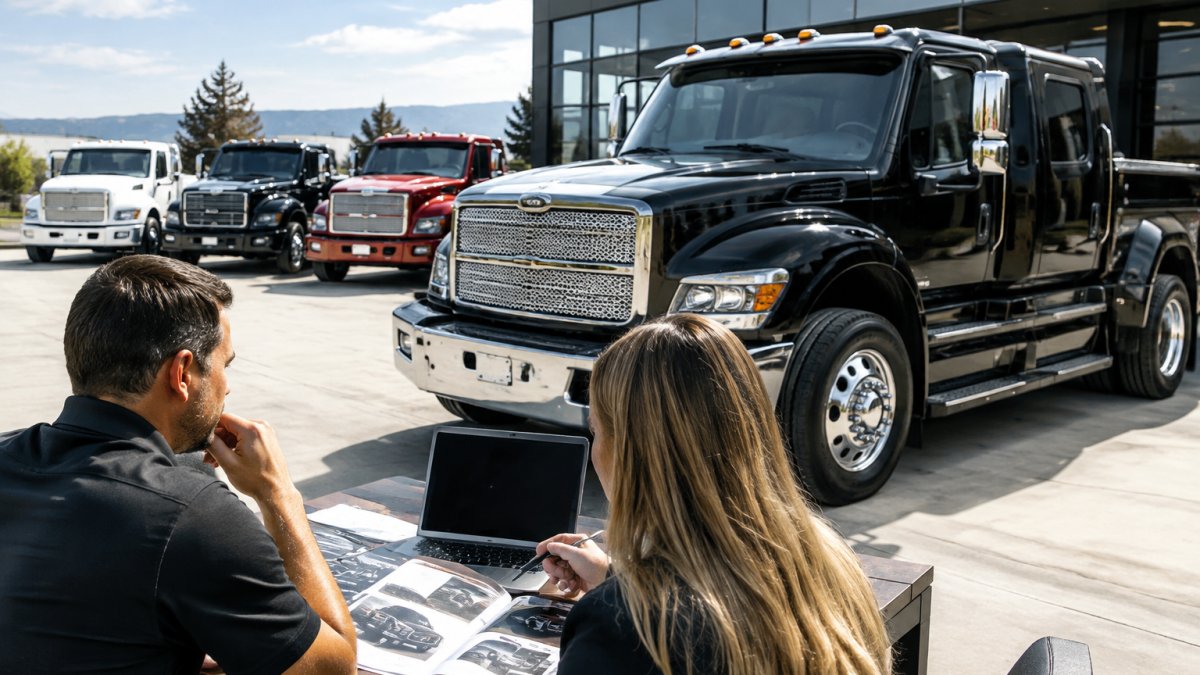
SportChassis has been in business since 1987 and has built luxury haulers for the last 20 years. The brand earns strong value and quality marks, including recognition through J.D.
That matters for reliability. When the truck is engineered as a whole, the parts work together instead of fighting each other.
Before you visit, it helps to review our custom pickup truck buyer's guide so you know what to look for. And when you're ready to move forward, you can get pre-approved for financing ahead of time.
Frequently Asked Questions
How do you choose a truck that is good for towing and daily driving?
Start with your real trailer weight, not the maximum tow rating. Add the trailer, cargo, passengers, and gear, then compare that total against the truck's payload and gross combined weight rating on the door-jamb sticker. A truck with a comfortable unladen ride and enough payload for your heaviest trip handles both jobs. Test drive it empty and loaded before you commit, and check fuel economy at highway speed since that is where a daily driver spends most of its miles.
What is the difference between towing capacity and payload?
Towing capacity is the maximum weight of a trailer the truck can pull. Payload is the weight the truck itself can carry, including passengers, cargo, tongue weight, and accessories. Payload is usually the limit you hit first. Tongue weight counts against payload, so a heavy trailer can push a truck over its payload rating even when the trailer is under the tow rating. Check both numbers on the door-jamb sticker before you load up.
How do you balance weight in a trailer?
Load heavier items over or slightly ahead of the trailer axles, then keep side-to-side weight even so the trailer tracks straight. Aim for roughly 10 to 15 percent of total trailer weight on the tongue for a conventional hitch, and confirm with a tongue-weight scale rather than guessing. Secure cargo so it cannot shift, and recheck the load after the first few miles. An unbalanced trailer sways and pushes the truck around on the highway.
Can a heavy-duty truck be comfortable for everyday driving?
Yes, when the truck is built for it. The tradeoff is cost and complexity, so match the build to how often you tow.
The real challenge isn't finding a truck that tows. It's finding one you're happy to drive every single day. Extreme Sport Chassis builds and sells trucks for exactly that driver: heavy-duty capability with luxury comfort, personalized to your needs. Browse our inventory, talk through your towing setup with our team, and drive away in a truck that handles the trailer and the commute. Get started with Extreme Sport Chassis and find the truck that does both jobs right.