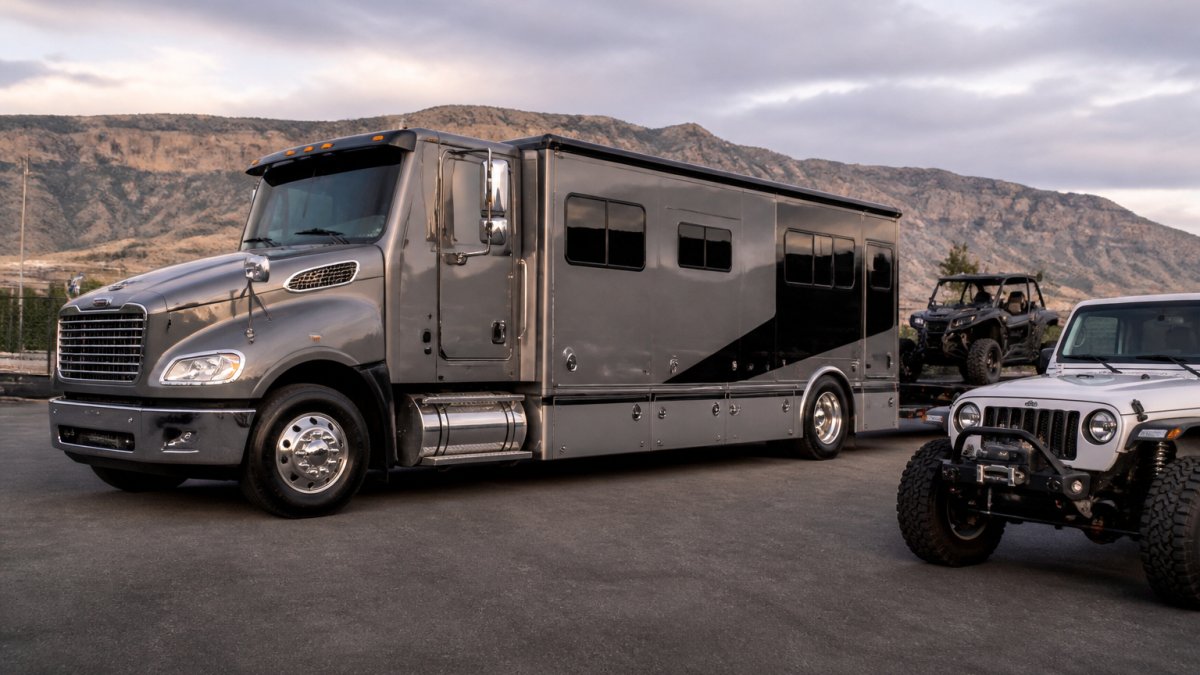
 Comparison
Is It Worth Driving for Custom Trucks?
Last Updated: October 26, 2026
Quick Summary
Custom trucks are worth it when your trailer is heavy, your routes are long, and you keep the truck long enough for capability and resale to pay back the premium. They are not worth it for occasional light towing, where a standard pickup is the smarter spend.
- A custom builder sizes springs, brakes, and cooling to your loaded trailer rather than a generic package.
- Longer lead times and a higher upfront cost than a stock pickup are the main drawbacks.
- Match your trailer's loaded weight to the truck's GCWR, not the empty weight on the spec sheet.
- SportChassis has built luxury haulers for 20 years and has been in business since 1987.
- The single most useful number to bring to a builder is your loaded trailer weight.
Table of Contents
- What Driving a Custom Truck Actually Changes
- Custom Truck Benefits and Drawbacks
- Custom Truck vs. Standard Pickup
- Custom Truck Towing Capability
- SportChassis vs. Aftermarket Hauler
- How to Decide If a Custom Truck Is Worth It
- See the SportChassis Inventory in Person
- Frequently Asked Questions
What Driving a Custom Truck Actually Changes
A custom truck is a pickup or hauler built or finished to a buyer's specification rather than to a factory trim level. That definition matters because it separates two very different purchases: a truck you order from a dealer lot, and a truck built around how you actually tow, work, and commute.
At Extreme Sport Chassis, we sell SportChassis haulers to buyers who tow horse trailers, RVs, and equipment, and the question we hear most is whether the custom route earns its keep. Below, we break down the real trade-offs, from towing geometry to resale, so you can decide with your eyes open.
Here's what most guides get wrong: they treat "custom" as a cosmetic category. It isn't. The meaningful differences show up in frame strength, brake capacity, and how the truck behaves with a loaded trailer behind it.
Custom Truck Benefits and Drawbacks
The honest answer is that custom trucks trade upfront complexity for capability you can't bolt on later, but the trade-offs are specific, not vague. Here is what actually changes when you move from a stock pickup to a purpose-built hauler.
Benefits, with the mechanism behind each:
- Capability matched to your actual trailer weight and tongue load. A custom builder sizes springs, brakes, and cooling to your loaded trailer rather than to a generic package. That means the truck stays within its gross combined weight rating (GCWR) on long grades instead of relying on a driver to feather the throttle.
- Interior comfort that holds up on a daily commute. Luxury hauler interiors are finished for hours in the seat, not just a job site, better seats, sound deadening, and climate control that matter on a 400-mile pull.
- One builder accountable for how the whole truck performs together. When frame, hitch, brake controller, and trailer wiring are engineered as a system, you have one warranty story and one phone number when something goes wrong.
- Stronger resale on well-documented, low-volume builds. A documented build history and third-party recognition (SportChassis is rated in J.D. Power) support resale in a way a shop's own reputation cannot replicate.
Drawbacks, with the mechanism behind each:
- Longer lead times than buying off a lot. A built-to-order truck means waiting through build and delivery rather than driving home the same week.
- Higher upfront cost than a stock pickup. The premium buys capability and finish, and it only pays back if you actually use the capability.
- Resale depends heavily on build documentation and brand recognition. An undocumented build is harder to sell and easier to discount.
- Service can be awkward if your builder is far from home. Confirm where warranty and routine service happen before you commit.
A common mistake is shopping custom trucks on price alone. The build that saves money upfront often costs more over five years in brakes, tires, and downtime, because undersized components wear faster under load. The right question is not "what does it cost today" but "what does it cost per loaded mile over the years I plan to keep it."
Custom Truck vs. Standard Pickup
A standard pickup is engineered to a mass-market compromise. A custom truck is engineered to one buyer's use case. That's the whole difference, and it drives everything else.
If you tow occasionally and commute mostly empty, a stock three-quarter-ton truck does the job. If your trailer is heavy, your routes are long, and you want the cab to feel like a luxury vehicle at the end of the day, the calculus flips. For a deeper look at how these builds come together, our custom pickup trucks buyer's guide walks through the decision in detail.
The trade-off isn't about which truck is "better." It's about whether your use case is specific enough to justify a specific build.
Custom Truck Towing Capability
Towing capability is where custom builds earn their reputation, and where marketing claims get slippery. The number that matters is the manufacturer's rated capacity for your exact configuration, not a brochure figure for a different cab and axle combo.
Three things separate a capable tow rig from an overloaded one:
- Gross vehicle weight rating (GVWR): the maximum the truck itself can weigh, loaded
- Gross combined weight rating (GCWR): truck plus trailer plus everything in both
- Brake and cooling capacity: the parts that fail first when ratings are pushed
If the class system and weight ratings are fuzzy for you, our explainer on what makes a truck heavy duty covers classes and GVWR in plain terms. Match your trailer's loaded weight to the rating, not to the empty weight on the spec sheet.
SportChassis vs. Aftermarket Hauler
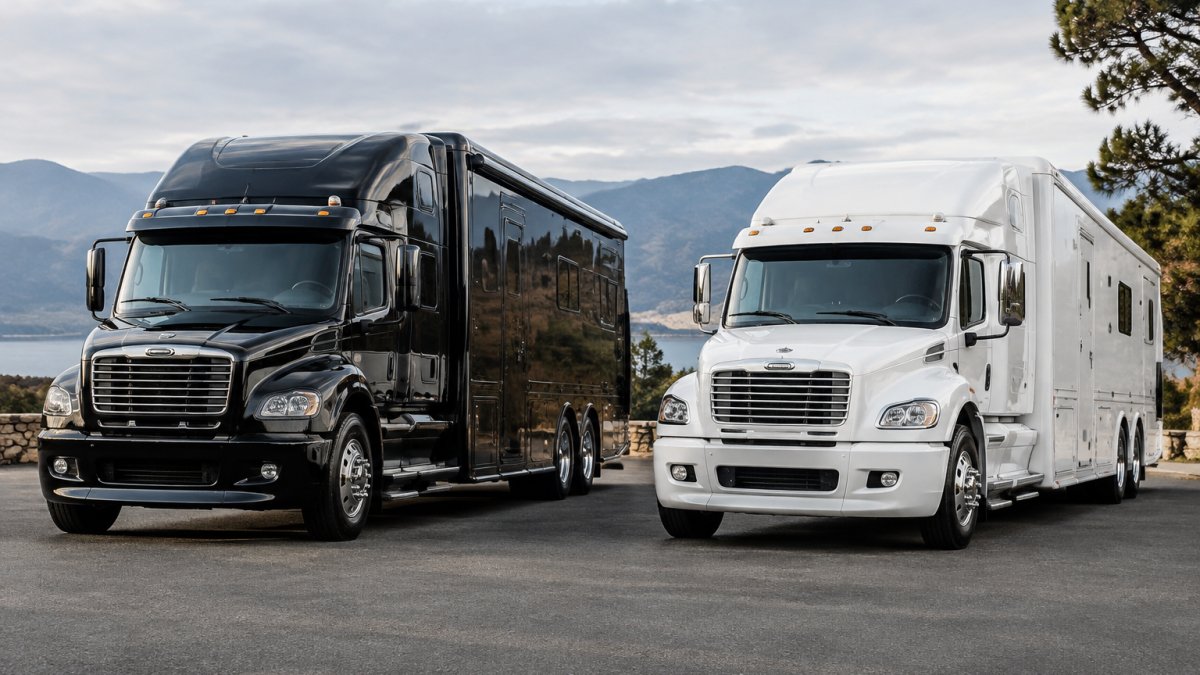
Here's where the decision gets practical. An aftermarket upfitter takes a stock chassis and modifies it. SportChassis starts from a medium-duty platform and builds a luxury hauler on top of it, which is a different starting point entirely.
We've built luxury haulers for the last 20 years and have been in business since 1987. SportChassis is rated in J.D. Power, and that third-party recognition matters at resale time in a way a shop's own reputation can't replicate. The value argument isn't that an upfit is bad. It's that a purpose-built hauler holds its value and its warranty story better than a modified pickup.
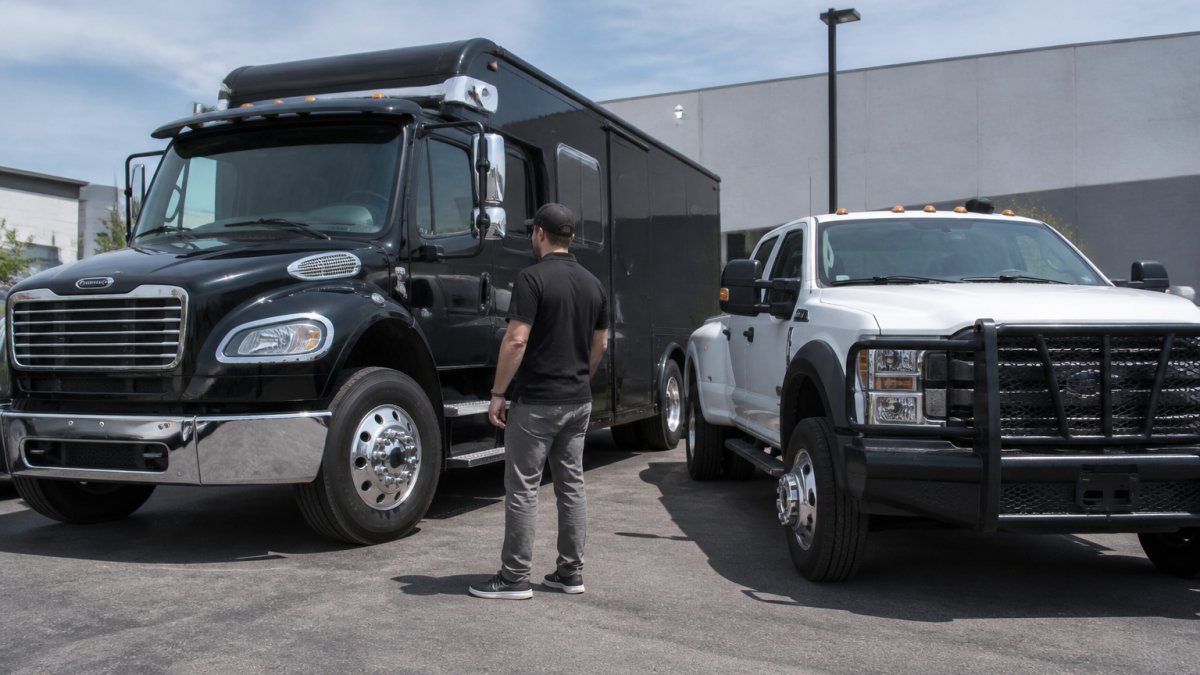
Watch out: the most common regret we hear from buyers who went the upfit route is mismatched components. Parts that were never designed to work together tend to show their limits on long pulls, not on the test drive. You can browse the SportChassis models for sale to compare configurations directly.
How to Decide If a Custom Truck Is Worth It
Most guides stop at a checklist. The gap they miss is the break-even question: how much extra capability and resale do you need to justify the premium? Run the decision as a short worksheet rather than a gut call.
Step 1, Write down your loaded trailer weight and tongue weight. Use the loaded figure, not the empty spec. This is the number every other decision hangs on.
Step 2, Confirm the truck's GCWR exceeds that combined figure with margin. Margin matters on grades, in heat, and when the trailer is heavier than planned.
Step 3, Estimate annual towing miles versus commuting miles. A truck that tows 15,000 miles a year and commutes 5,000 is a different purchase from one that tows 2,000 and commutes 15,000.
Step 4, Ask what the build includes for brakes, cooling, and hitch reinforcement. These are the parts that fail first when ratings are pushed, and they are where cheap builds cut corners.
Step 5, Request documentation of past builds for buyers with your use case. A builder who can show comparable builds is a builder who has solved your problem before.
Step 6, Confirm where service happens and how far you'd travel for it. Distance to service is a real ownership cost in time and downtime.
Step 7, Compare resale expectations, not just purchase price. A purpose-built hauler with documented history and third-party recognition tends to hold value better than a modified pickup.
The break-even logic, in plain terms: the custom premium pays back when (extra resale value) plus (avoided repair and downtime from undersized components) plus (the value you place on comfort and capability) exceeds the upfront difference. If you tow a few times a year on flat ground, that math rarely works and a standard pickup is the smarter spend. If you tow heavy loads on long routes and keep trucks for years, it usually does.
Match the build to the use case, not the brochure:
- Long-haul towing: prioritize cooling, brake capacity, and cab comfort.
- Show and specialty use: prioritize finish, documentation, and resale presentation.
- Vocational and equipment work: prioritize hitch reinforcement, payload, and service access.
If most boxes check and the break-even math leans your way, a custom build is worth it. For buyers planning around a specific trailer, our guide to planning custom truck builds for horse trailers walks through the sequencing.
Run the decision as a short worksheet rather than a gut call.
| Step | What to do |
|---|---|
| 1 | Write down loaded trailer weight and tongue weight |
| 2 | Confirm GCWR exceeds that combined figure with margin |
| 3 | Estimate annual towing miles versus commuting miles |
| 4 | Ask what the build includes for brakes, cooling, hitch reinforcement |
| 5 | Request documentation of past builds for your use case |
| 6 | Confirm where service happens and how far you'd travel |
| 7 | Compare resale expectations, not just purchase price |
See the SportChassis Inventory in Person
Specs on a screen don't tell you how a truck feels with a trailer behind it or how the cab suits your commute. That's the case for seeing it in person, and it's the reason we keep our inventory on the lot rather than behind a deposit form.
Our team will walk you through configurations, answer the towing questions that matter for your trailer, and help you compare against what you're driving now. Start by browsing the full inventory, then come see the trucks up close.
Frequently Asked Questions
Is it worth driving a custom truck?
It depends on how often you tow and how much you use the truck for work. Custom trucks cost more up front than a stock pickup, but they can pay off if you tow heavy trailers regularly, need a comfortable cab for long days, and want a truck that holds up to constant use. For occasional weekend towing, a standard pickup may be the better fit. The value comes from matching the build to your actual workload.
Are custom trucks practical for everyday driving?
Yes, if the build is set up for it. A truck with a comfortable interior, reasonable ride quality, and good visibility works fine for daily commutes and errands. The problems come from builds tuned only for looks or extreme off-road use. Tell the builder how you use the truck on normal days, not just on weekends, and ask for a setup that handles both.
Is a custom truck better than a standard pickup for towing?
For frequent heavy towing, a purpose-built custom truck usually wins. Custom truck towing capability comes from matched components: a stronger chassis, upgraded brakes, proper cooling, and a drivetrain sized to the trailer. A standard pickup can tow well within its ratings, but it may need add-on parts to handle constant heavy loads. The key is whether the parts work together as one system.
What should I look for when comparing a factory-built hauler with an aftermarket upfit?
Check three things: how long the builder has been in business, whether the truck is built as one integrated unit or assembled from add-on parts, and what support you get after the sale. A builder that has spent decades on luxury haulers has already solved the fit and reliability problems that show up later. Ask for examples of builds similar to your needs and inspect one in person before you decide.
The hardest part of this decision isn't finding a capable truck. It's finding one that tows your trailer safely and still feels right on the drive to work. Extreme Sport Chassis specializes in high-performance SportChassis trucks alongside cars, SUVs, and Jeeps, with custom solutions tailored to your towing needs and personalized guidance on vehicle selection. Get started with Extreme Sport Chassis and find a truck built for how you actually drive.