 How-to
Why Do Custom Trucks Cost More Than Stock Trucks?
Last Updated: November 15, 2026
Quick Summary
Custom trucks cost more because you pay for aftermarket parts the factory never installs, skilled shop labor at $100 to $200 per hour, and the engineering time to make it all work together. A stock truck is built to one assembly-line spec, while a custom build is a one-off.
- Aftermarket parts cost more than factory parts because custom shops buy in low volume, not millions of units.
- Ask for an itemized labor breakdown before approving any build work so hours don't surprise you.
- Budget $1,500 to $2,500 per year for maintenance on a modified truck versus $800 to $1,200 stock.
- A well-documented professional build may recover 50 to 70% of its modification cost at trade-in.
- Set your total budget with a 10-15% contingency before picking parts or a base truck.
Table of Contents
- Why Custom Trucks Cost More Than Stock Trucks
- What Drives Custom Truck Build Cost: Parts, Labor, and Time
- Custom Truck vs Stock Truck: Where the Money Goes
- Buying a Custom-Built Truck vs Building One Yourself
- Custom Truck Maintenance Costs and Ownership Realities
- How Modifications Affect Warranty, Insurance, and Resale Value
- Budgeting a Build: A Step-by-Step Planning Guide
- Choosing Your Custom Truck at Extreme Sport Chassis
- Frequently Asked Questions
Why Custom Trucks Cost More Than Stock Trucks
Custom trucks cost more because you are paying for parts the factory never installs, hours of skilled shop labor, and the engineering to make it all work together. A stock truck rolls off an assembly line built to one spec. A custom build is a one-off.
At Extreme Sport Chassis, we have watched this gap widen. According to the American Transportation Research Institute's 2025 cost report, the industry-average cost to operate a truck hit $2.336 per mile in 2025. That number covers fuel, maintenance, and repairs, not purchase price. It still explains why buyers care so much about what a truck delivers per dollar.
Here is the short answer: a custom truck costs more upfront, but the money goes somewhere specific. Below, we break down exactly where.
What Drives Custom Truck Build Cost: Parts, Labor, and Time
Custom truck build cost comes down to three things: aftermarket parts, shop labor, and the time the truck sits in a bay. Miss any one of them in your budget and the total surprises you.
Aftermarket Parts and Materials
Aftermarket parts cost more than factory parts for a simple reason: volume. Ford, Chevy, and Ram buy millions of components at once. A custom shop buys one bumper, one set of springs, one wiring harness. That volume gap shows up directly in the price you pay.
Pricing for these upgrades depends on the parts selected, the scope of the work, and the vehicle. For current pricing and a quote on any build, visit the Extreme Sport Chassis website.
Shop Labor and Installation Hours
Labor is the line item buyers underestimate most. Custom labor rates for truck modifications run from $100 to $200 per hour, according to LiftedTrucks.com's 2026 cost breakdown. That is the shop rate. The hours are what catch people.
Labor time depends on the specific work, the vehicle, and the level of preparation required. A build quote from the shop will reflect the hours for your project.
A suspension swap, a custom interior, and a lighting package can each eat a full day or more. Add fabrication, cutting, welding, and fitting one-off parts, and the hours climb fast. That is where a build quote separates itself from a parts list. A parts list tells you what the build costs before anyone touches a wrench. A quote tells you what it costs to finish.
Ask for an itemized breakdown of labor before you approve any build work.
Custom Truck vs Stock Truck: Where the Money Goes
A stock truck and a custom truck can start from the same chassis and end up far apart in price. The difference is what happens after the factory.
Lift Kits, Suspension, and Wheels
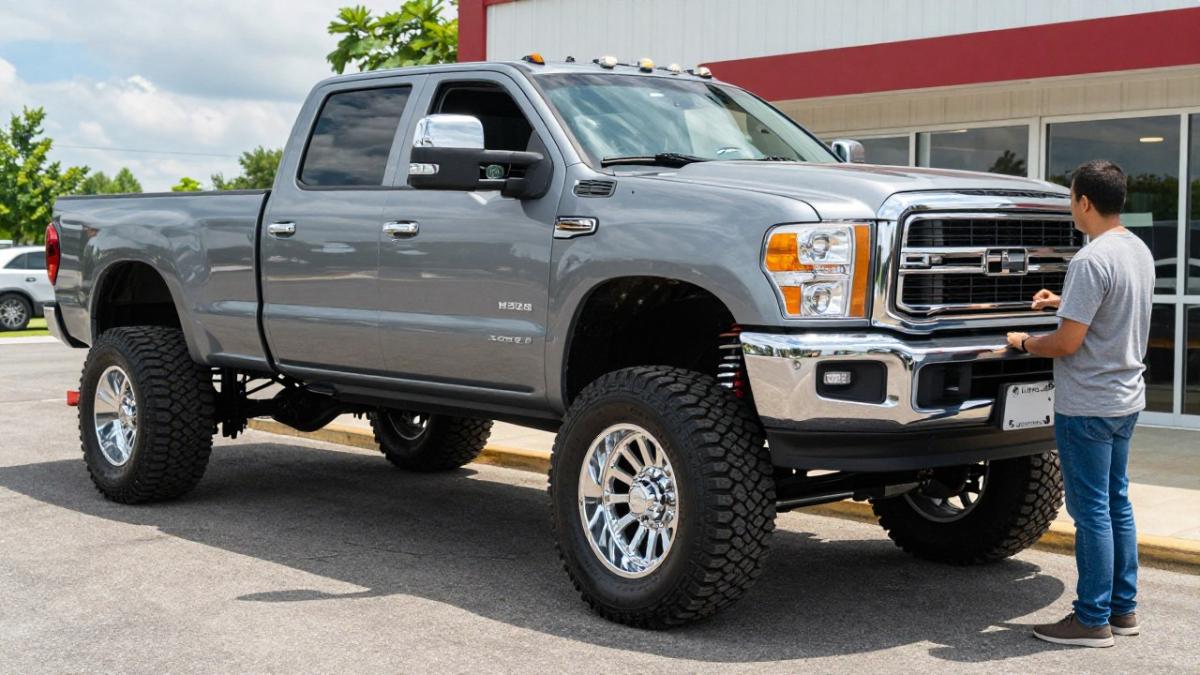
Suspension is the first place money goes. A lift kit changes ride height, but a full suspension package changes how the truck carries weight. Springs, shocks, control arms, and steering components all get replaced together.
Wheels and tires follow. Bigger wheels need the right offset. Bigger tires need clearance and gearing changes. Each choice pulls the next one along.
Interior and Exterior Styling
Interior work is where a custom build becomes a luxury vehicle. Leather, custom stitching, audio, and sound deadening all take hours.
Exterior styling adds up just as fast. Paint, wraps, grilles, running lights, and bed treatments are visible upgrades. They are also labor-heavy. Want to see how this plays out in ownership? Read our take on whether it is worth driving a custom truck.
Buying a Custom-Built Truck vs Building One Yourself
Buying a custom-built truck usually costs less than building one yourself, once you count labor, mistakes, and downtime. The parts bill is only half the story.
Building your own means sourcing parts, finding a shop, and managing the schedule. One wrong spring rate or a wiring harness that does not match sends you back to the parts counter. A common mistake is budgeting for parts and forgetting the install.
A professional build bundles design, parts, and labor into one plan. Our guide to the benefits of professional custom truck builds walks through what that changes.
Custom Truck Maintenance Costs and Ownership Realities
Custom truck maintenance can run higher than stock because there are more parts to service. Bigger tires wear faster, performance suspension needs inspection, and custom electronics need a knowledgeable shop.
Plan for these realities before you buy:
- Tires: larger sizes cost more per unit and generally wear sooner than stock sizes.
- Brakes: heavier wheels and bigger loads stress the braking system, so pads and rotors may need replacement sooner.
- Service access: some custom parts make routine work slower. A fabricated bumper can block access to the oil filter or intercooler piping, adding labor time to a simple oil change.
- Specialist labor: not every shop knows your setup. A dealer may refuse to work on a lifted truck, and a specialty shop may charge a higher rate than a general service center.
- Suspension inspection: performance shocks and coilovers need periodic inspection, rebuilds, or replacement.
A Worked Total-Cost-of-Ownership Example
Consider a mid-size pickup bought new at $45,000 and built with a $15,000 modification budget (suspension, wheels and tires, bumper, and interior upgrades). Add 7% sales tax and typical registration fees, and the drive-off cost lands near $48,500 before financing. Over the first three years, expect:
- Fuel: modified trucks with larger tires and lifts often lose 1-3 mpg, which can add several hundred dollars a year at typical mileage.
- Maintenance: budget $1,500-$2,500 per year for tires, brakes, fluid changes, and suspension service on a modified truck, versus roughly $800-$1,200 for a stock equivalent.
- Insurance: a lifted or heavily modified truck may carry a higher premium; some carriers add 10-20% or exclude modification-related damage unless you add a rider.
- Resale: a well-documented, professionally built truck may recover 50-70% of its modification cost at trade-in. A poorly documented build may recover almost none.
None of this is a dealbreaker. It just belongs in the budget from day one. The buyers who get surprised are the ones who budget for the build and not for the years after it.
How Modifications Affect Warranty, Insurance, and Resale Value
Modifications can affect your factory warranty, your insurance rate, and what your truck is worth at trade-in. Check with your insurance carrier before a build, and keep documentation of any work performed.
Budgeting a Build: A Step-by-Step Planning Guide
Budgeting a custom build starts with the truck, not the parts catalog. Work backward from what you need the truck to do.
- Set your total budget, including tax, title, and a 10-15% contingency
- Pick the base truck and trim level that fits the job
- List must-have modifications for towing, hauling, or off-road use
- Price parts and labor together for each item
- Get financing squared away before you commit to a build
- Add a maintenance reserve for the first year
- Schedule the build and confirm shop lead times
If you need help spreading the cost, explore our used car financing options to see what fits your budget.
| Build Stage | What It Covers | Where Costs Hide |
|---|---|---|
| Base truck | Chassis, trim, drivetrain | Dealer markup, add-ons |
| Suspension and wheels | Lift, springs, tires | Alignment, gearing |
| Styling | Paint, interior, lighting | Labor hours, fabrication |
| Protection | Bed liner, coatings | Prep time |
| Reserve | First-year service | Custom part lead times |
Choosing Your Custom Truck at Extreme Sport Chassis
Choosing the right custom truck starts with a shop that has done it before. Extreme Sport Chassis has been in business since 1987 and has spent the last 20 years building luxury haulers. SportChassis vehicles are rated in J.D. Power studies.
SportChassis trucks are built as complete vehicles that combine heavy-duty capability with a luxury-grade cabin.
Ready to shop? Browse Sport Chassis for sale or start with our 2026 buyer's guide to custom pickup trucks.
The gap between a stock truck and a custom build is real, and so is the price. The right shop closes that gap with engineering, not guesswork. Extreme Sport Chassis offers SportChassis trucks built for towing, hauling, and off-road work, backed by a team that helps you match a build to your budget and lifestyle. Get started with Extreme Sport Chassis and find a truck built for the way you actually drive.
Frequently Asked Questions
Why do custom trucks cost more than stock trucks?
The gap comes down to parts, labor, and time. A stock truck rolls off an assembly line where thousands of identical units spread the engineering cost. A custom trucks build adds aftermarket components, fabrication, and skilled installation on top of the base vehicle price. A full build can require many hours of skilled labor. You are paying for one-off work rather than mass production.
Is it cheaper to buy a custom-built truck or build one yourself?
On paper, buying parts and paying a shop piece by piece can look cheaper. In practice, the totals often converge once you add freight, rework, and downtime. Buying a custom-built truck bundles engineering, installation, and a single point of accountability into one purchase. Building one yourself spreads the risk across multiple vendors, and mismatched components are a common reason projects stall. Compare total cost including your own time before deciding.
Are custom trucks more expensive to maintain?
Custom truck maintenance costs usually run higher than a stock truck's, mainly because specialty parts cost more and not every shop stocks them. Tires for larger wheels and replacement suspension components can carry a premium, so budget extra for wear items.
Do custom truck upgrades increase resale value?
Some do, many do not. Lift kits and cosmetic changes rarely return their cost at resale, and buyers often discount heavily modified trucks they cannot verify. Documented, professionally installed upgrades from a recognized builder hold value better because buyers can trace the work.