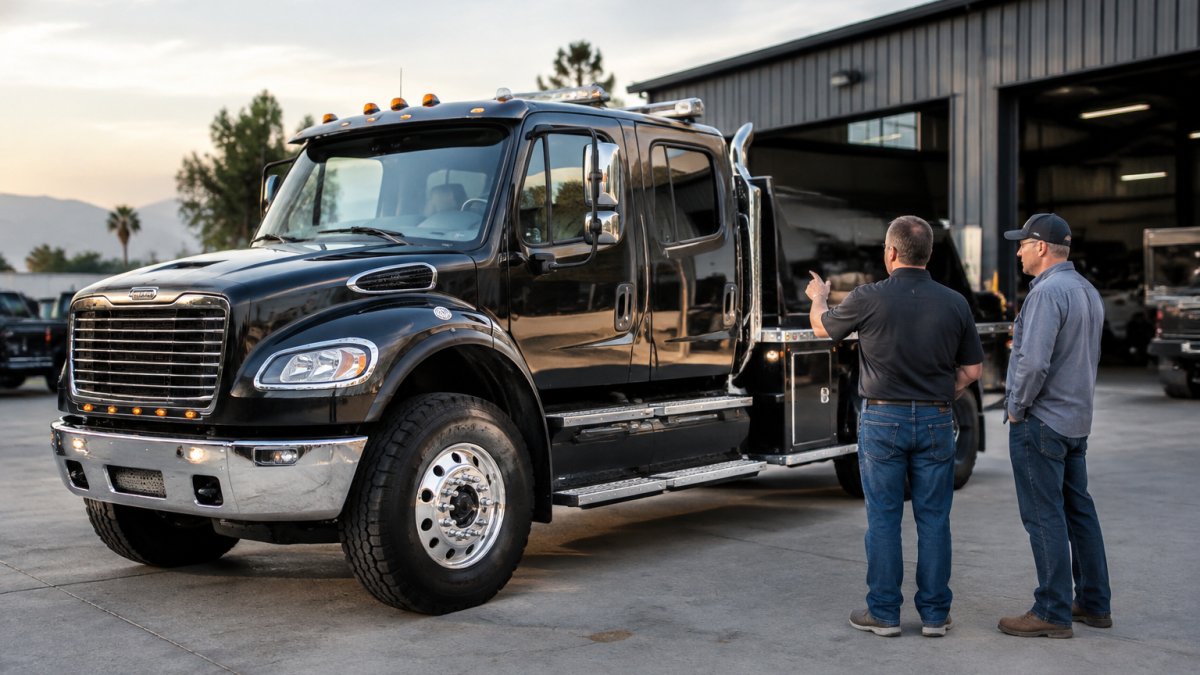
 Ultimate guide
The Benefits of Professional Custom Truck Builds
Last Updated: November 5, 2026
Quick Summary
Professional custom truck builds start from your actual load, route, and equipment list, then specify the chassis, drivetrain, and body around those numbers rather than a trim package. Every component is matched to loaded weight, so braking, cooling, suspension, and body mounting are sized for sustained work instead of occasional towing. The result is a truck engineered for your job, not the average buyer's.
- Payload, towing capacity, and gross combined weight are the three specifications that decide whether a build works.
- A body and equipment package can stay under gross vehicle weight rating while still overloading the rear axle.
- Purpose-built compartments and drawers cut labor hours per job by reducing trips and gear handling.
- Aftermarket parts installed without a system-level plan are the leading cause of reliability problems.
- Skip a custom build if you change vehicles every two to three years and won't recover the upfront cost.
Table of Contents
- Custom Truck vs. Stock Truck: What Actually Changes
- Custom Truck Towing and Hauling Capabilities That Fit the Job
- Storage, Organization, and Daily Productivity Gains
- Safety, Durability, and Long-Term Reliability
- The Custom Truck Build Process, Step by Step
- How to Choose a Custom Truck Builder
- Schedule a Build Consultation with Extreme Sport Chassis
- Frequently Asked Questions
Custom Truck vs. Stock Truck: What Actually Changes
A custom truck build is a vehicle configured around a specific job before it leaves the builder's floor, not a factory truck modified afterward, and professional custom truck builds start with your load rather than a trim package.
A stock truck is a compromise by design.
That's where professional custom truck builds earn their keep: a builder starts from your actual load, route, and equipment list, then specifies the chassis, drivetrain, and body around those numbers.
- Chassis and suspension are matched to loaded weight, not curb weight
- Braking and cooling are sized for sustained work, not occasional towing
- Body mounting is engineered for the body you actually want
For a deeper look at how these differences play out on the road, read our comparison of custom Sport Chassis versus stock trucks for heavy towing. If you're still weighing whether the investment makes sense at all, is it worth driving a custom truck covers that question directly.
Custom Truck Towing and Hauling Capabilities That Fit the Job
Towing and hauling capability is the strongest argument for a professional build: every component is specified against your real loaded weight.
Three specifications decide whether a build works:
- Payload capacity, the weight of bodies, tools, water, fuel, and passengers carried on the truck itself
- Towing capacity, the loaded weight of what you pull, plus the hitch and tongue weight it adds
- Gross combined weight, the total the truck and trailer together are engineered to move and stop
Most buyers focus on towing capacity and ignore payload and gross combined weight. A common mistake is ordering a heavy service body and full tool load, then discovering the remaining payload won't cover a crew and a loaded trailer.
Braking deserves its own mention.
The trade-off is real, and it's worth naming: a truck specified for maximum hauling will ride firmer and feel heavier in daily driving than a half-ton commuter. If you need one vehicle to do both, read our guide on whether one truck can handle towing and daily driving before you commit to a specification.
Storage, Organization, and Daily Productivity Gains
Storage and organization pay back fastest because they change every workday.
The productivity gain comes from reduced labor hours per job, not from working faster. Fewer trips back to the truck, fewer minutes hunting for a fitting, fewer damaged items to replace.
Driver comfort belongs here too. A quiet cab, supportive seating, and controls laid out for long days reduce fatigue, and a less-tired driver makes fewer mistakes.
Safety, Durability, and Long-Term Reliability
Aftermarket parts installed without a system-level plan are the leading cause of reliability problems. A lift kit that changes geometry without correcting steering and driveline angles, a body added without checking frame loading, or accessory wiring tapped into the wrong circuit all create failures that show up months later.
The Custom Truck Build Process, Step by Step
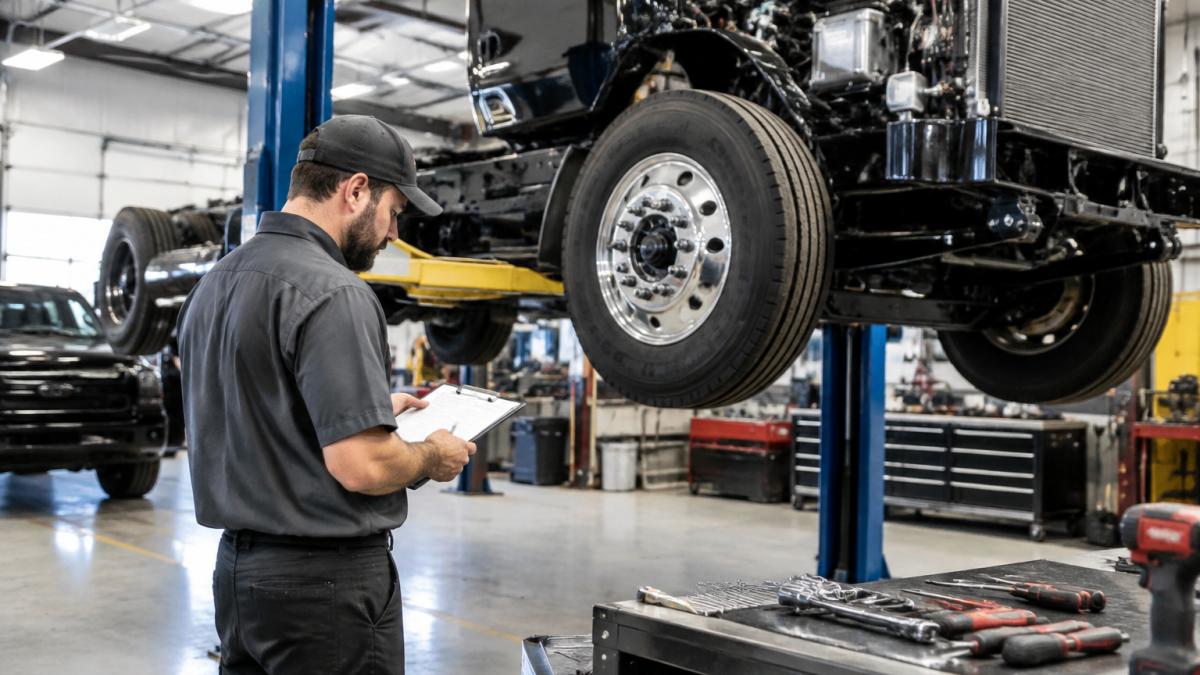
- Requirements interview. You describe the load, the trailer, the terrain, the crew, and the daily route. The builder records weights and dimensions, not preferences.
- Specification and weight calculation. Payload, towing, and gross combined weight are calculated against the proposed configuration. Components are selected to match. This is where the build is won or lost.
- Compatibility and compliance review. The builder checks that the body, equipment, and accessories do not push the truck past its axle ratings, gross vehicle weight rating, or gross combined weight rating, and confirms the installation will not void the chassis warranty.
- Design and approval. Body layout, storage, and interior are drawn up and reviewed with you before fabrication begins.
- Chassis and drivetrain work. Suspension, braking, cooling, and mounting are addressed first, because everything else depends on them.
- Body and equipment installation. The flatbed, service body, or specialized storage goes on, with wiring and accessories integrated as planned.
- Interior and comfort finishing. Seating, sound control, and controls are completed.
- Testing and handover. The finished truck is checked under load, and you're walked through the specification and maintenance schedule.
The specification checklist to bring to the first meeting
The step most buyers underestimate is the weight calculation. Skipping it is how builds end up technically complete and practically overloaded. Bring these numbers to the first conversation:
- Payload: the combined weight of the body, tools, water, fuel, passengers, and any cargo carried on the truck itself
- Tongue weight: the downward load the trailer puts on the hitch, which counts against payload
- Trailer weight: the loaded weight of what you pull, not the dry weight on the spec sheet
Where compatibility goes wrong
Watch out: a body and equipment package can keep the truck under its gross vehicle weight rating while still overloading the rear axle, which is why axle ratings matter as much as the headline payload number.
Warranty is the other compatibility trap. Adding a body or accessory can affect chassis warranty coverage if the installation isn't done to the manufacturer's guidance.
Plan for the ownership period, not just delivery day
A build specification should account for the full time you own the truck. Ask about service intervals and replacement cycles before you sign off; a truck specified with common, serviceable components is easier to maintain and easier to sell than one built around rare parts.
Here is the build process laid out in order, from the first requirements interview to handover.
| Step | What happens |
|---|---|
| Requirements interview | Builder records load, trailer, terrain, crew, route weights and dimensions |
| Specification and weight calculation | Payload, towing, and gross combined weight calculated against proposed configuration |
| Compatibility and compliance review | Checks axle ratings, GVWR, GCWR, and chassis warranty |
| Design and approval | Body layout, storage, and interior drawn up and reviewed |
| Chassis and drivetrain work | Suspension, braking, cooling, and mounting addressed first |
| Body and equipment installation | Flatbed, service body, or storage installed with wiring integrated |
| Interior and comfort finishing | Seating, sound control, and controls completed |
| Testing and handover | Truck checked under load; specification and maintenance schedule reviewed |
How to Choose a Custom Truck Builder
Choosing a builder comes down to five questions: can they show you comparable builds, can they explain their weight calculations in writing, do they specify components as a system, can they document the total cost of ownership, and will they still be around to support the truck.
The harder part is the commercial and engineering discipline behind the build, and that's where the real differences between builders show up.
Evaluate the builder on cost transparency, not just craftsmanship
Then ask the question most buyers never think to ask: what will this truck cost to own over five years? A professional builder should be able to walk you through the major ownership cost lines without pretending to predict fuel prices:
- Upfront build cost versus a comparable stock truck plus aftermarket upfit
- Fuel consumption at your real loaded weight, not the empty-truck rating
- Scheduled maintenance intervals and the cost of consumables sized for heavy work
- Tire and brake replacement intervals under loaded duty
The line buyers underestimate is downtime. A truck in the shop isn't earning, and a build using common, serviceable components is easier to get back on the road than one built around rare parts. Ask how long a typical repair takes and whether the builder stocks or can quickly source the components they install.
Measure the return instead of trusting the pitch
Productivity claims are easy to make and hard to verify. Before you commit, define two or three measurable indicators you'll track after delivery: labor hours per job, jobs completed per week, or vehicle availability days per month. A builder confident in their work will welcome that measurement.
Use this evaluation checklist
- Can they show examples of builds for buyers with needs similar to yours?
- Will they walk you through payload and towing calculations in writing?
- Do they specify components as a matched system rather than a parts list?
- Do they provide an itemized quote rather than a lump sum?
Know when a custom build is not worth it
A balanced builder will tell you when a custom build does not make sense. Skip the full custom route if any of these apply:
- Your payload and towing needs are modest and a properly equipped stock truck meets them
- You change vehicles every two to three years and will not own the truck long enough to recover the upfront cost
- Your job requirements are still changing and you would be over-specifying a truck around a workflow that will not exist next year
- You need a cosmetic or accessory change that a local upfit shop can handle without engineering work
Over-specifying is a real risk. A truck built for maximum capability rides firmer, costs more upfront, and can be harder to resell to a buyer who doesn't need that capability.
Best for: buyers who want a documented, system-level build with transparent cost and a clear process. Skip if: you only need a cosmetic change that a local accessory shop can handle.
That history and third-party recognition are the kind of evidence worth asking any builder for. You can browse Sport Chassis trucks for sale to see actual builds rather than brochure photos, and our custom pickup truck buyer's guide covers the specification questions to bring to any shop.
Schedule a Build Consultation with Extreme Sport Chassis
The gap between a stock truck and a properly specified build isn't marketing. It's payload math, matched components, and a process that starts with your load instead of a trim package.
At Extreme Sport Chassis, we specialize in high-performance SportChassis trucks alongside cars, SUVs, and Jeeps.
Get started with Extreme Sport Chassis and drive a truck built around your job, not the average buyer's.
Frequently Asked Questions
What are the benefits of a professionally custom-built truck?
A professional custom truck build matches the vehicle to how you actually use it. That means towing and hauling capability sized to your trailer or equipment, storage built around your tools, and a drivetrain and brake package chosen for the loads you carry rather than a one-size-fits-all factory setup. Builders also handle component compatibility so aftermarket parts work together, which protects reliability and resale value over the life of the truck.
Is a custom-built truck better than a stock truck?
It depends on your workload. A stock truck handles light, occasional towing and everyday driving well. If you tow an RV, boat, or horse trailer regularly, or haul heavy equipment daily, a custom build lets you specify payload capacity, towing capacity, and comfort features a factory configuration can't combine. The trade-off is higher upfront cost and a build timeline, so match the decision to how hard the truck will actually work.
What should you consider before ordering a custom truck build?
Start with your real numbers: trailer weight, tongue weight, equipment load, and daily mileage. Then decide which features matter most, such as specialized storage, driver comfort, or a specific truck body like a flatbed or service body. Confirm the builder's warranty terms and how they handle component compatibility. Finally, ask for examples of builds for customers with needs similar to yours so you can judge fit before committing.
How can a custom truck build be tailored to towing or hauling needs?
Builders size the suspension, brakes, cooling, and hitch setup to the loads you tow, rather than to a generic maximum. For hauling, they can add a flatbed, service body, or dump body with tie-downs and storage positioned for how you load equipment. That combination improves stability, reduces brake and drivetrain strain, and cuts the labor time spent securing and accessing gear on site.