 Comparison
Custom Sport Chassis vs Stock Trucks for Heavy Towing
Last Updated: November 2, 2026
Quick Summary
A custom sport chassis is a Class 5 medium-duty platform with a luxury crew cab and purpose-built hauler body, while a stock truck is a standard-production pickup. The 2026 SportChassis LH7 carries a 33,000-lb GVWR and over 17,000 lbs of payload, far beyond any pickup.
- Standard SportChassis configurations produce 1,050 lb/ft of torque, with big-block builds reaching 1,850 ft/lb.
- A 33,000-lb GVWR can trigger commercial-vehicle rules above the 26,001-lb threshold in many states.
- SportChassis has built luxury haulers as a completed product for the last 20 years and been in business since 1987.
- One iRV2 owner reported 10 MPG loaded with a SportChassis versus 6 MPG loaded with an F-350.
- A 12% federal excise tax applies to the first retail sale of truck chassis and bodies.
Table of Contents
- Custom Sport Chassis vs Stock Trucks: The Core Differences
- Medium Duty Truck Towing Capacity and Payload Compared
- SportChassis vs Western Hauler: Build Philosophy and Value
- Luxury Hauler Truck Features That Change Daily Driving
- Ride Quality, Handling, and Driver Fatigue on Long Hauls
- Total Cost of Ownership and Real-World Fuel Efficiency
- Choosing Your Custom Hauler at Extreme Sport Chassis
- Frequently Asked Questions
Custom Sport Chassis vs Stock Trucks: The Core Differences
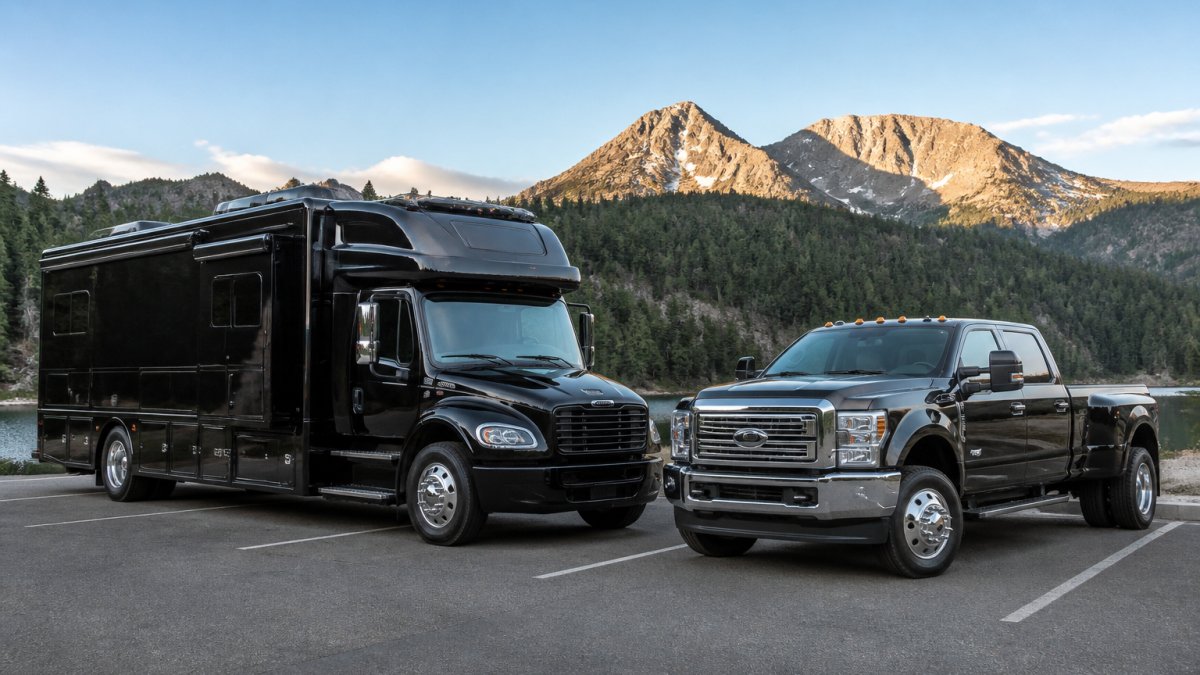
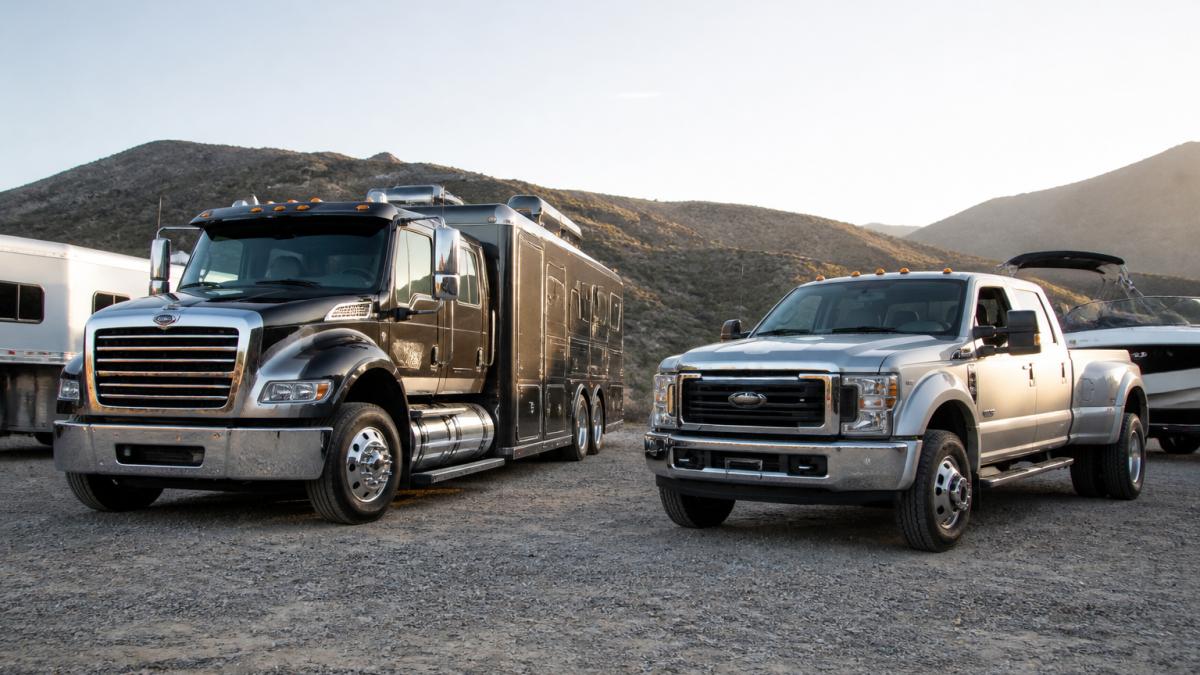
A custom sport chassis is a medium-duty commercial truck platform fitted with a luxury crew cab and a purpose-built hauler body, while a stock truck is a standard-production pickup. The difference starts at the frame. At Extreme Sport Chassis, we sell both worlds, so we have no reason to pretend a stock F-250 and a SportChassis are the same animal.
Here is the number that ends most arguments: a 2026 SportChassis LH7 on the Freightliner M2 Plus platform carries a Gross Vehicle Weight Rating of 33,000 lbs and more than 17,000 lbs of payload (2026 SportChassis LH7 listing(EXTERNAL_LINK: 2026 SportChassis LH7 listing | horsetrailerworld.com)). No half-ton or three-quarter-ton pickup approaches that. For a broader look at how the custom pickup market is structured, our 2026 buyer's guide to custom pickup trucks walks through the categories before you commit.
That gap explains the price gap. It does not explain everything else, which is what the rest of this comparison covers.
Medium Duty Truck Towing Capacity and Payload Compared
Payload tells the story fastest. The LH7's 17,000-plus lbs of payload (Horse Trailer World model data(EXTERNAL_LINK: Horse Trailer World model data | horsetrailerworld.com)) covers a loaded living quarters, water, gear, and passengers without touching the trailer's weight. Torque matters too: standard SportChassis configurations produce 1,050 lb/ft, with big-block builds reaching 1,850 ft/lb (SportChassis specifications(EXTERNAL_LINK: SportChassis specifications | sportchassis.com)). If the class system itself is fuzzy for you, our explainer on truck classes and GVWR breaks down why a Class 5 platform behaves differently from a Class 3 pickup.
| Category | Stock Heavy-Duty Pickup | Custom Sport Chassis |
|---|---|---|
| Platform class | Class 3 consumer pickup | Class 5 medium-duty |
| GVWR | Typically well under 20,000 lbs | 33,000 lbs on the LH7 |
| Payload | A few thousand lbs | 17,000+ lbs |
| Torque | Consumer-grade | 1,050 to 1,850 ft/lb |
| Braking | Pickup-rated | Commercial-grade |
| Best for | Occasional towing, daily driving | Frequent heavy towing |
Best for: buyers who tow heavy trailers most weekends. Skip if: your trailer is light and your truck is mostly a commuter.
The Legal and Licensing Nuance Most Buyers Miss
A Class 5 medium-duty chassis crosses a regulatory line that a Class 3 pickup does not. At a 33,000-lb GVWR, the truck is above the 26,001-lb threshold that triggers commercial-vehicle rules in many states. That does not automatically make it a commercial truck for a private owner, but it does mean registration, licensing, and insurance can work differently than they do for an F-250. Most practitioners find that private, non-commercial registration is available for a personal-use hauler, but the paperwork and the insurance conversation are not the same as a pickup's. Confirm your state's rules before you buy, this is the single most common surprise for first-time medium-duty owners.
Safety Features That Separate the Two Platforms
Watch out: a 33,000-lb GVWR truck can push you into air-brake endorsement territory in some states depending on how it is configured and registered, verify the requirement before you take delivery.
SportChassis vs Western Hauler: Build Philosophy and Value
SportChassis is positioned as a value-focused luxury hauler builder.
Upfit companies take a chassis cab and add a hauler body afterward. The result can be excellent, but you inherit the integration risk: body mounts, wiring, cooling, and braking all depend on how well two separate businesses coordinated. SportChassis has spent the last 20 years building luxury haulers as a completed product, and the company has been in business since 1987. J.D. Power ratings give buyers an independent quality signal that a one-off upfit cannot offer. Custom bodies mounted with vibration-isolating components rather than rigid hard mounts are now the industry direction (STX SportChassis build notes(EXTERNAL_LINK: STX SportChassis build notes | stxsportchassis.com)), and that is exactly the kind of engineering decision a factory makes once and an upfitter makes differently on every truck.
Best for: buyers who want one accountable builder. Skip if: you enjoy managing a project across three vendors.
Luxury Hauler Truck Features That Change Daily Driving
This is the objection we hear constantly: "My F-250 tows fine on weekends, but the commute is punishing." A SportChassis addresses it at the platform level. Air ride smooths the unladen ride that makes medium-duty trucks harsh, and the crew cab is trimmed for comfort rather than work-site durability alone. The trade-off is real: a 33,000-lb GVWR truck is a big vehicle in a parking garage. Whether a hauler can genuinely serve as a daily driver is a fair question, and our article on whether one truck can handle towing and daily driving answers it without spin.
Ride Quality, Handling, and Driver Fatigue on Long Hauls
Ride quality is where the commercial platform earns its keep. Driver fatigue on a 600-mile tow day comes from vibration, noise, and constant steering corrections, and a heavier, longer wheelbase chassis reduces all three.
Towing stability improves because the trailer is not pushing a light truck around. Trailer sway, the thing that turns a crosswind into a white-knuckle event, is dampened by mass, wheelbase, and commercial-grade suspension working together. One owner on the iRV2 forums reported 10 MPG loaded with a SportChassis versus 6 MPG loaded with an F-350 (iRV2 owner comparison(EXTERNAL_LINK: iRV2 owner comparison | irv2.com)), which says as much about how hard the smaller truck was working as it does about fuel.
Total Cost of Ownership and Real-World Fuel Efficiency
Total cost of ownership favors the custom chassis once towing gets heavy and frequent, but the math is more nuanced than a single sticker comparison. Most competitors stop at purchase price; the real story is in the costs that accumulate over years of use.
The Upfront Gap
The upfront gap is real: a standard Ford F-450 retails around $104,000 (Big Truck Big RV pricing analysis(EXTERNAL_LINK: Big Truck Big RV pricing analysis | bigtruckbigrv.com)), and a custom hauler sits above that. Pricing on our inventory depends on configuration, so check current listings rather than trusting a number from a forum. Add the 12% federal excise tax that applies to the first retail sale of truck chassis and bodies (IRS excise tax guidance(EXTERNAL_LINK: IRS excise tax guidance | irs.gov)) and the purchase needs to be planned, not impulse-bought. Our breakdown of whether it is worth driving for a custom truck covers the value case in more detail.
Where the Math Turns: Insurance, Maintenance, and Depreciation
Maintenance is where the commercial platform earns its keep. A stock truck worked near its limit wears brakes, transmission, and suspension faster. A commercial-grade drivetrain built for the load lasts longer under it, and service intervals on medium-duty components are typically longer. The trade-off is that when something does need service, medium-duty parts and labor can cost more per visit, so the question is frequency versus severity, not simply which is cheaper.
Real-World Fuel Efficiency
Fuel is the most anecdotal number in this comparison, so treat any single figure with caution. One owner on the iRV2 forums reported 10 MPG loaded with a SportChassis versus 6 MPG loaded with an F-350 (iRV2 owner comparison(EXTERNAL_LINK: iRV2 owner comparison | irv2.com)), which says as much about how hard the smaller truck was working as it does about fuel. A common pattern is that a medium-duty truck holds its MPG closer to its empty figure when loaded, while a pickup's economy drops sharply as it approaches its limit. Empty, the pickup will usually win; loaded and frequent, the gap narrows or reverses. Your actual numbers depend on trailer weight, terrain, and driving style, track your own before assuming a forum figure applies to you.
Choosing Your Custom Hauler at Extreme Sport Chassis
Choosing comes down to one question: how often do you tow heavy, and how much do you value the hours between trips? If the answer is "often" and "a lot," a SportChassis is the better truck. If it is "rarely," a stock pickup is the sensible buy, and we will tell you so.
We are a locally owned dealership specializing in high-performance SportChassis trucks alongside cars, SUVs, and Jeeps, and we sell out of state. Browse SportChassis models for sale to see current configurations.
Frequently Asked Questions
What are the primary benefits of a custom SportChassis over a stock truck?
A custom sport chassis pairs a commercial-grade platform with a luxury crew cab. The 2026 SportChassis LH7 carries a 33,000 lbs gross vehicle weight rating and over 17,000 lbs of payload, with torque ratings up to 1,850 ft-lb in big-block configurations. That means steadier towing stability, less trailer sway, and lower driver fatigue than a stock pickup pushed to its limits. You also get air ride suspension and a purpose-built body rather than bolt-on parts.
Is a medium-duty custom chassis worth the investment for recreational towing?
It depends on how often you tow and how heavy the load is. For occasional light towing, a stock pickup may suit your needs better. Custom builds also carry longer lead times, so plan around your season.
How does the comfort of a SportChassis compare to a standard heavy-duty pickup?
The gap shows up on long drives. SportChassis mounts its body with vibration-isolating components instead of rigid hard mounts, and pairs that with air ride suspension and a luxury crew cab interior. Owners report the difference in reduced driver fatigue and steadier handling with a trailer attached. A stock pickup rides well empty, but the comfort advantage shifts once you add 10,000 lbs or more behind the hitch.
What makes SportChassis a better choice than aftermarket upfit companies?
SportChassis has built luxury haulers for roughly 20 years and has been in business since 1987, so the platform is engineered as a complete vehicle rather than assembled from mismatched parts. The company is rated in J.D. Power studies, which gives buyers an independent quality reference. Upfit shops vary widely in integration and warranty support, and a factory-built hauler keeps the chassis, body, and interior designed to work together.
Are SportChassis trucks reliable for long-distance hauling?
The commercial-grade foundation supports it. A 33,000 lbs GVWR and heavy-duty suspension mean the truck runs below its limits on most recreational loads, which reduces wear on brakes and the drivetrain. One owner on iRV2 Forums reported 10 MPG loaded with a SportChassis versus 6 MPG with a Ford F-350, showing the platform holds up under sustained towing. Regular service on the diesel engine and air ride system keeps it that way.
The hardest part of this decision is not the spec sheet. It is being honest about how you actually use a truck. Get that right and the choice makes itself. Get started with Extreme Sport Chassis and find a hauler built around your trailer, your commute, and your budget.