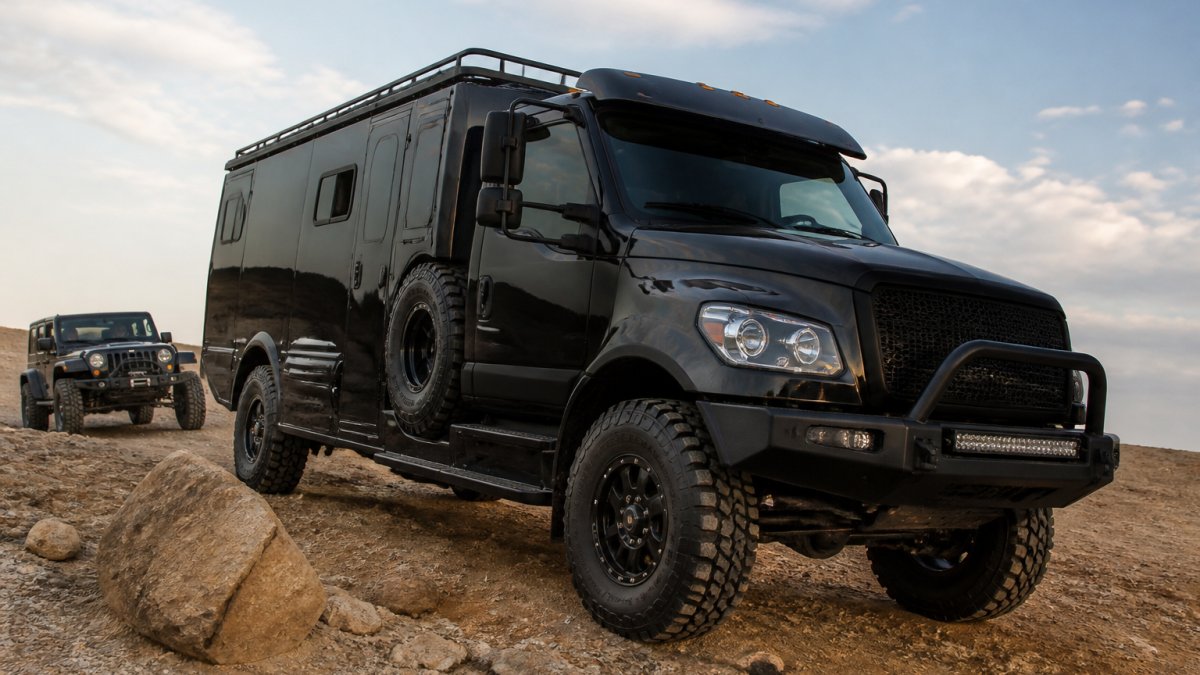
 Ultimate guide
How to Choose the Right Truck for Off-Roading
Last Updated: November 1, 2026
Quick Summary
To choose the right off-road truck, start with your terrain and daily use rather than the badge, then match specs to your worst realistic surface. A capable 4WD off-road truck combines ground clearance, low-range gearing, and durable components, while payload and towing needs decide whether a midsize or full-size truck fits your life.
- Name your worst realistic surface before you name a truck model.
- Midsize trucks squeeze through tight trails; full-size trucks carry more payload and tow heavier trailers.
- Low-range gearing is the single feature separating a trail-capable truck from a sticker package.
- Off-road tires deliver the biggest capability gain per dollar of any modification.
- Build an overland setup in stages and test each stage on a real trip.
Table of Contents
- Start With Your Terrain and Daily Use, Not the Badge
- Midsize vs Full-Size Off-Road Truck: Which Fits Your Life
- What Makes a Capable 4WD Truck for Off-Roading
- Off-Road Truck Tires: The Upgrade That Changes Everything
- Building an Overland Truck Setup That Stays Reliable
- Total Ownership Cost and the Used-Truck Inspection
- Why a Purpose-Built Luxury Hauler Beats a Bolt-On Upfit
- Book a Walkaround at Extreme Sport Chassis
- Frequently Asked Questions
Start With Your Terrain and Daily Use, Not the Badge
Choosing the right truck for off roading starts with two questions most buyers skip: where will this truck actually drive, and what does it do the other five days a week? Answer those honestly and the shortlist builds itself.
A truck that spends most weekends on graded forest roads doesn't need a long-travel suspension and mud-terrain tires. It needs ground clearance, a working four-wheel-drive system, and decent all-terrain rubber.
Here's a framework for choosing:
- Terrain first. Sand, rock, mud, and snow each reward different equipment. Name your worst realistic surface before you name a model.
- Daily duty second. Commute miles, parking garages, and highway comfort matter more than most buyers admit.
- Towing third. If a trailer is in your future, payload capacity and towing capacity set the floor for everything else.
If you tow and commute in the same truck, our guide on whether one truck can handle towing and daily driving walks through the trade-offs in detail.
Midsize vs Full-Size Off-Road Truck: Which Fits Your Life
The midsize versus full-size decision comes down to trail width and payload, not preference. Midsize pickups squeeze through tight trails, turn in smaller spaces, and cost less to run.
A common mistake is buying midsize for the trail and then discovering the overland build outgrows it. Roof tent, fridge, water, recovery gear, and a second spare add up fast, and payload capacity is where midsize trucks run out of room first.
Payload, Towing, and the Overlanding Weight Problem
Overlanding equipment is heavier than it looks. A loaded bed rack, rooftop tent, dual battery system, and recovery kit can push a truck close to its rated payload before a single passenger climbs in.
Full-size trucks usually win this math. Midsize trucks win on agility and fuel economy. If you're unsure how heavy-duty ratings work, our breakdown of truck classes and GVWR explains what the numbers actually mean.
What Makes a Capable 4WD Truck for Off-Roading
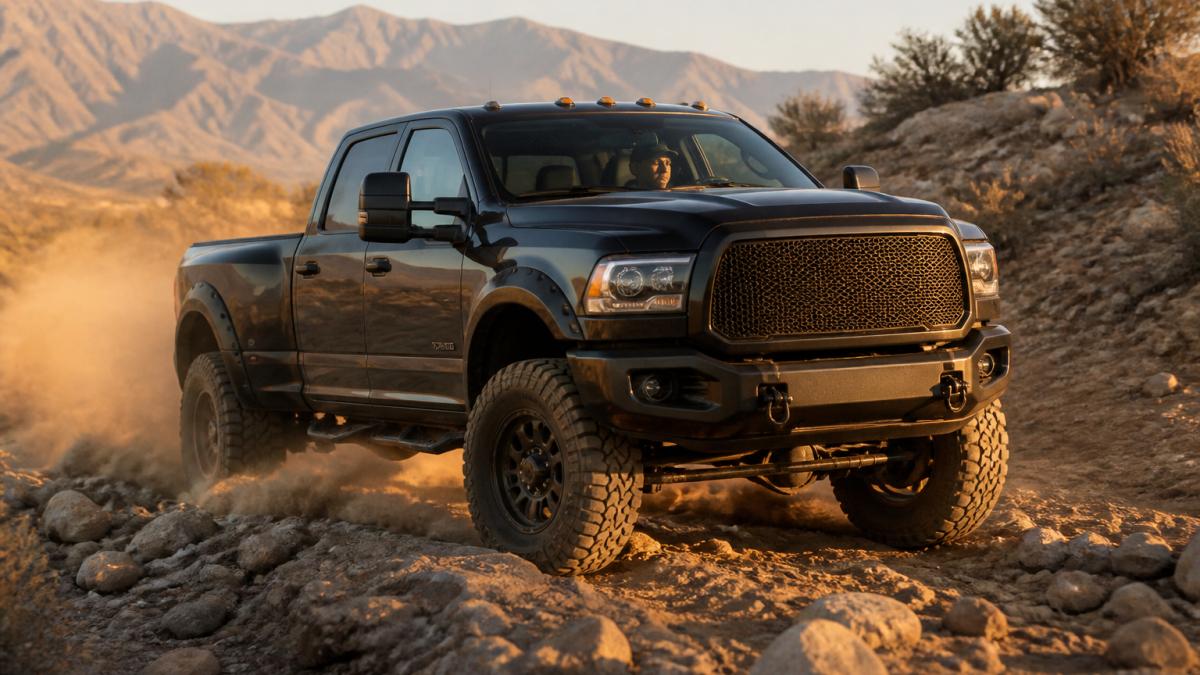
A capable 4WD truck for off-roading combines clearance, traction, and durability: enough ground clearance to avoid obstacles, a four-wheel-drive system with low-range gearing, and components strong enough to survive repeated trail use.
Reading Ground Clearance, Angles, and Suspension Travel
Three specifications tell you most of what a truck can handle before you drive it:
- Ground clearance decides what you clear without contact. Measure at the lowest hanging component, usually the differential, transfer case, or exhaust, not at the rocker panel. A truck with 8 inches at the diff and 10 inches at the door sill is an 8-inch truck off-road.
- Approach angle sets how steep a ledge or ramp the front bumper survives. It is the angle between the ground and a line from the front tire contact patch to the lowest front overhang.
- Departure angle does the same for the rear bumper and hitch. A receiver hitch hanging below the bumper cuts your departure angle more than most buyers realize.
Suspension travel and axle articulation keep tires planted when one side drops into a hole. Independent front suspension generally rides better on road but offers less articulation than a solid front axle; solid axles articulate more but compromise highway manners. A locking differential or limited-slip differential turns a spinning tire into forward motion, and traction control and crawl control handle the rest electronically.
Which Specs Matter for Which Terrain
Not every number carries equal weight on every surface. Use this as a starting filter:
- Rock crawling: articulation, low-range gearing, skid plates, and a locking rear differential matter most. Approach and departure angles decide whether you scrape bumpers on ledges.
- Mud: tire tread pattern, ground clearance, and gearing dominate. A locking differential helps, but momentum and tire choice do more work than articulation.
- Sand: tire flotation (wider, aired-down tires), horsepower, and low weight matter more than clearance. A rear locker helps you avoid digging in.
Four-Wheel-Drive Systems and Gearing
Part-time 4WD is the traditional truck setup: you shift into four-high or four-low manually and should not use it on dry pavement (AWD vs. 4WD Explained). Full-time or automatic 4WD can be left engaged on mixed surfaces and is friendlier for daily driving. Low-range gearing (often around 2.7:1 in the transfer case) multiplies torque for crawling and steep descents, and it is the single feature that separates a trail-capable truck from a grocery-getter with a sticker package.
If you are unsure how weight ratings and truck classes work, our breakdown of truck classes and GVWR explains what the numbers actually mean.
Match the specification to the surface you actually drive on.
| Terrain | Specs that matter most |
|---|---|
| Rock crawling | Articulation, low-range gearing, skid plates, locking rear differential |
| Mud | Tire tread pattern, ground clearance, gearing |
| Sand | Tire flotation, horsepower, low weight |
| Snow and ice | Traction aids, tire compound, driver skill |
| Overlanding and forest roads | Payload, ground clearance, all-terrain tires |
Off-Road Truck Tires: The Upgrade That Changes Everything
Off-road truck tires deliver the single biggest capability gain per dollar of any modification. All-terrain tires handle gravel, light mud, and highway miles quietly.
Tire size changes gearing, speedometer accuracy, and clearance all at once, so decide before you lift anything. For a deeper walkthrough of load ranges and tread choices, read our guide on how to choose off road tires.
Building an Overland Truck Setup That Stays Reliable
Reliability comes from restraint. Build in stages, test each stage on a real trip, and add the next piece only when the last one proves itself.
Start with recovery gear, a winch rated for your truck's weight, and proper skid protection. Add suspension and tires together so they're tuned as a system. Watch out: mixing parts from different vendors without checking compatibility is how drivetrain vibration and premature wear begin.
Total Ownership Cost and the Used-Truck Inspection
Most off-road truck buyers budget for the purchase and forget everything after it. Total ownership cost runs well past sticker price: fuel economy, tires, maintenance, insurance, and depreciation all compound, and modified trucks depreciate differently because the resale market discounts unknown workmanship. This section gives you a framework for estimating the real cost and a checklist for buying used without inheriting someone else's mistakes.
Building a Realistic Cost Picture
Estimate these line items before you commit, using your own driving patterns rather than brochure claims:
- Fuel: off-road tires, lifts, and added weight all cut fuel economy. Lifts, larger tires, and added weight can reduce fuel economy, and roof racks and cargo widen that gap.
- Tires: mud-terrain tires wear faster than all-terrains and cost more per set. Budget for replacement sooner than you would on a passenger vehicle, especially if you rotate less often.
- Maintenance: off-road use accelerates wear on suspension bushings, ball joints, shocks, and drivetrain fluids. Plan for more frequent fluid changes in the transfer case and both axles if you routinely ford water or drive in dust.
Build your budget around total cost of ownership, not the sticker price.
Used-Truck Inspection Checklist
Shopping used? Inspect these before anything else:
- Frame and underbody rust or impact damage, look for crushed rocker panels, dented skid plates, and bent crossmembers
- Fluid condition in the transfer case and both axles, milky fluid means water intrusion
- Suspension bushings, ball joints, and shock leakage, worn bushings and leaking shocks are common on trail-used trucks
A pre-purchase inspection by a mechanic who knows 4WD systems is the cheapest insurance in the transaction. Ask for maintenance records, and walk away from any seller who cannot explain what was modified and why.
Negotiating Around Modifications
Modifications rarely add resale value and often subtract it. Use that in negotiation: aftermarket parts with unknown installation quality are a discount lever, not a selling point. If the seller cannot document the work, price the truck as if you will need to redo it.
Why a Purpose-Built Luxury Hauler Beats a Bolt-On Upfit
A purpose-built luxury hauler such as a SportChassis truck is engineered as one system from the start. SportChassis has been in business since 1987 and has spent the last 20 years building luxury haulers, so the engineering knowledge sits with the manufacturer.
That matters for contractors hauling equipment and owners towing trailers. You can browse the Sport Chassis inventory to see how that approach looks in practice.
Book a Walkaround at Extreme Sport Chassis
Specifications on a screen don't tell you how a truck feels loaded and rolling. Walk the lot, open the doors, check the payload stickers, and ask the questions that matter to your terrain and your trailer. Our team will help you match a truck to your actual use, whether that's a SportChassis hauler, a Jeep, or a used truck that fits your budget. You can also check our location and directions to plan your visit.
Frequently Asked Questions
What should I look for when choosing a truck for off-roading?
Start with four-wheel drive that has a low-range transfer case, then check ground clearance, approach and departure angles, and whether the truck has skid plates and a locking or limited-slip rear differential. Payload capacity matters as much as trail hardware because gear, water, and a rooftop tent all count against it. Finally, drive it on pavement. A truck you dread commuting in gets left in the driveway on Saturday.
Is a midsize or full-size truck better for off-roading?
The midsize vs full-size off-road truck question comes down to trail width and cargo. Midsize trucks squeeze through tight forest roads and rock gardens, turn in smaller spaces, and cost less to run. Full-size trucks win on payload, towing, and highway comfort, which matters if you haul a trailer or carry heavy equipment. If your weekends mix narrow trails with towing, decide which one you do more often.
Do I need 4WD or is AWD enough for off-roading?
A 4WD truck for off-roading gives you a low-range transfer case that multiplies torque for crawling and climbing, plus the option to lock into four-high or four-low. All-wheel drive sends power to all wheels automatically but usually lacks low range and can overheat when worked hard on loose climbs. For graded dirt roads, AWD is fine. For rocks, deep sand, or steep descents, choose a true 4WD system.
Are stock trucks capable of off-roading?
Many stock 4WD trucks handle forest roads, gravel, and moderate trails without modification. What stock trucks often lack is tire grip and underbody protection. Swapping to all-terrain tires and adding skid plates covers most beginner terrain. Lift kits and oversized tires help on severe obstacles, but they raise the center of gravity and hurt daily comfort, so add them only when your trails demand it.
What tires are best for off-road trucks?
All-terrain tires suit most drivers because they grip dirt and gravel while staying quiet on the highway. Mud-terrain tires clear mud and rock better but hum loudly and wear faster on pavement. Match the load rating to your truck and trailer, keep the size close to stock to protect gearing and speedometer accuracy, and check tread depth before every season. Tires are the single biggest capability upgrade per dollar.
How much payload do I need for an overland truck setup?
Add up everything you plan to carry: passengers, water, fuel, recovery gear, a bed rack, a rooftop tent, and tools. Then compare that total to the truck's payload rating on the door jamb sticker, not the brochure. Overland builds commonly run out of payload before they run out of space. Leave a margin for passengers and trailer tongue weight so the truck stays stable and within its rated limits.
The right truck for off-roading is the one engineered for the work you actually do, not the one with the loudest badge. Extreme Sport Chassis builds and sells purpose-built luxury haulers with heavy-duty towing capability, premium interior comfort, and factory-integrated engineering rather than bolted-on parts. Get started with Extreme Sport Chassis and find a truck that hauls your trailer on Saturday and treats you well on Monday.