 Listicle
7 Best Trucks for Hauling Horse Trailers
Last Updated: November 4, 2026
Quick Summary
The best truck for hauling horse trailers is one whose towing and payload ratings exceed your actual loaded weight with a 10-15% safety margin. Half-ton trucks suit light two-horse bumper-pull trailers, three-quarter-ton trucks handle most multi-horse loads, and one-ton trucks carry the heaviest gooseneck and fifth-wheel setups. Always check payload and rear axle ratings, not just towing capacity.
- A two-horse bumper-pull trailer typically weighs 3,000-4,500 lb empty and 6,000-8,000 lb loaded.
- Gooseneck and fifth-wheel trailers put roughly 15-25% of loaded weight on the pin.
- A half-ton truck can be within its tow rating yet exceed payload once tongue weight and gear are added.
- Buying a one-ton truck for a light two-horse trailer gives a stiff, bouncy empty ride.
- Ask for the original window sticker or a VIN lookup to confirm a used truck's actual tow rating.
Table of Contents
- How to Match Horse Trailer Towing Capacity to Your Truck
- Half-Ton, Three-Quarter-Ton, and One-Ton Trucks Compared
- The Best Truck for Towing a Two-Horse Trailer
- Heavy-Duty Pickups for Gooseneck and Multi-Horse Loads
- Used Trucks for Hauling Horse Trailers: What to Inspect
- Custom Truck Builds for Horse Trailers: When Stock Falls Short
- See the SportChassis Inventory at Extreme Sport Chassis
- Frequently Asked Questions
How to Match Horse Trailer Towing Capacity to Your Truck
The right truck for hauling horse trailers is the one whose ratings exceed your actual loaded weight, not the one with the biggest number on the brochure. That single principle decides everything else in this guide.
Start with gross trailer weight, the loaded weight of the trailer plus horses, tack, hay, and water. Then add tongue weight or pin weight, the downward load the hitch carries. Compare both against the truck's towing capacity and payload capacity, which you'll find on the door-jamb sticker and in the manufacturer specifications. A safety margin of 10-15% below the maximum is a sensible target.
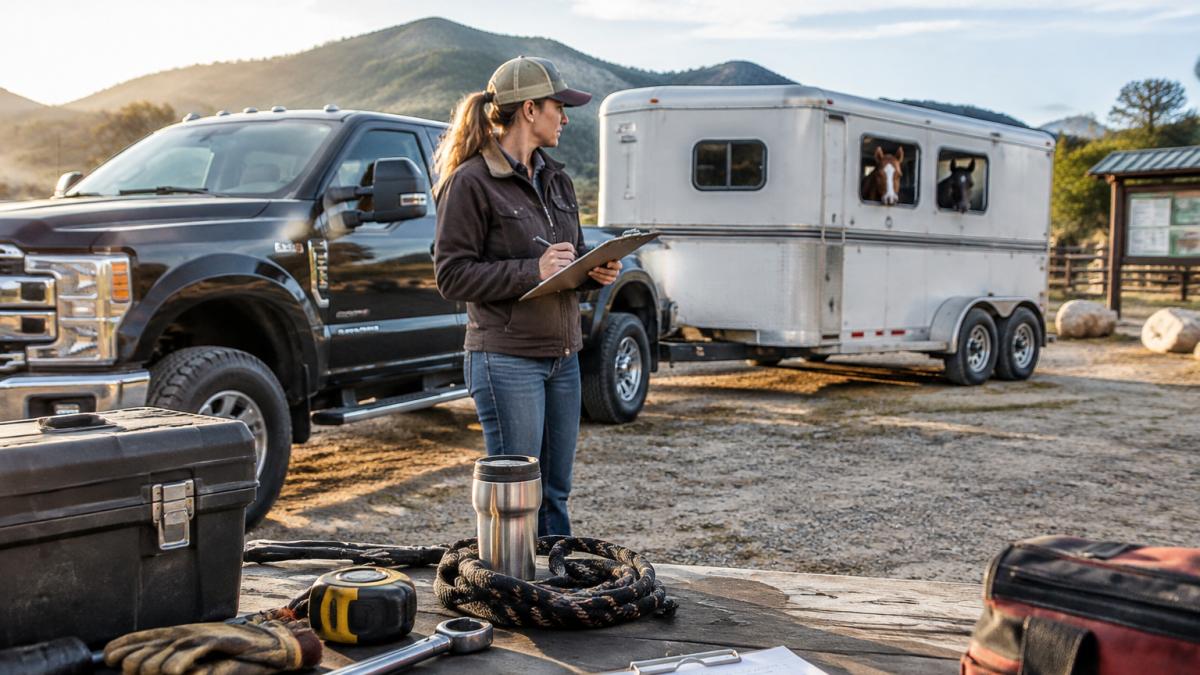
A Loaded-Weight Worksheet You Can Copy
Work through this before you shop:
- Base trailer weight, from the trailer's certification label
- Horse weight, estimated per horse and multiplied by head count
- Tack, hay, and water, typically the heaviest items owners forget
- Total loaded trailer weight, compared to the trailer's gross trailer weight rating
- Tongue weight or pin weight, checked against the hitch rating
- Payload used, meaning tongue weight plus passengers plus cargo, checked against payload capacity
- Truck's gross combined weight rating, compared to truck plus trailer combined
If any line exceeds its rating, step up a truck class. Treating every half-ton truck as suitable for a two-horse trailer oversimplifies the decision. The truck-trailer combination has to be evaluated as a whole.
Half-Ton, Three-Quarter-Ton, and One-Ton Trucks Compared
Half-ton trucks suit lighter bumper-pull trailers, three-quarter-ton trucks handle most multi-horse loads, and one-ton trucks carry the heaviest gooseneck and fifth-wheel setups. That's the short version. The longer version depends on your specific numbers, because ratings swing widely within a single model year based on engine, cab, bed length, axle ratio, and trim.
Per Stokes Hodges Ford's towing guidance, an F-150 fits a bumper-pull trailer while heavier needs point toward a Super Duty. Double D Trailers adds that a diesel engine can be the better choice for larger, heavier trailers, especially with large-breed horses.
| Class | Typical Use | Hitch Setup | Watch For |
|---|---|---|---|
| Half-ton | Light single-horse or two-horse bumper-pull | Weight-distributing hitch | Payload runs out fast |
| Three-quarter-ton | Two to three horses, some gooseneck | Gooseneck or fifth-wheel | Pin weight eats payload |
| One-ton | Multi-horse gooseneck, long hauls | Gooseneck or fifth-wheel | Stiffer empty ride |
Why the Same Truck Has Three Different Ratings
A truck's door-jamb sticker lists gross vehicle weight rating (GVWR), gross combined weight rating (GCWR), and, on heavier trucks, a rear gross axle weight rating (GAWR). Towing capacity is not a single fixed number; it is derived from GCWR minus the truck's own curb weight, and it changes with cab, bed, drivetrain, and axle ratio. That is why two trucks that look identical on the lot can carry ratings thousands of pounds apart. Always pull the rating for the exact VIN, not the model line.
Worked Example: How Pin Weight Consumes Payload
Payload is the load the truck itself carries: passengers, cargo, the hitch, and the tongue or pin weight of the trailer. A gooseneck or fifth-wheel trailer puts roughly 15-25% of its loaded weight on the pin, and that pin weight counts against payload, not against towing capacity alone.
Consider a three-horse gooseneck with a loaded weight of about 12,000 lb. At a 20% pin weight, that is roughly 2,400 lb sitting on the rear axle before you add a single passenger. Add two adults, a generator, hay, and a full water tank, and a three-quarter-ton truck with a 3,000-3,500 lb payload rating is suddenly close to its limit. A one-ton truck with a higher rear GAWR gives you the margin back. Run this math for your own trailer before you fall in love with a truck.
Watch out: a truck can be under its towing capacity and still be over its payload or rear GAWR. Payload and axle ratings are the limits owners most often exceed without realizing it.
If GVWR classes and axle ratings are new territory, our guide on what makes a truck heavy duty explains the numbers in full.
The Best Truck for Towing a Two-Horse Trailer
For a two-horse bumper-pull trailer, a well-equipped half-ton can work, but a three-quarter-ton gives you a cushion most owners appreciate. Verify the exact configuration's ratings before you commit.
Start With the Loaded Weight, Not the Model
A two-horse bumper-pull trailer typically weighs 3,000-4,500 lb empty. Add two horses at roughly 1,000-1,200 lb each, plus tack, hay, and water, and a realistic loaded weight lands near 6,000-8,000 lb. Tongue weight on a bumper-pull runs about 10-15% of loaded weight, so expect roughly 600-1,200 lb pressing down on the hitch. That tongue weight comes straight out of payload.
A half-ton truck with a payload rating near 1,500-2,000 lb can handle that load with two passengers and light cargo, but add a third rider, a full cooler, and a generator, and the margin disappears. A three-quarter-ton truck with a 3,000 lb-plus payload rating leaves room to spare and tows with less squat and better stability.
Real-World Trade-Offs Beyond the Tow Rating
Maximum tow rating tells you what a truck can pull on a flat test loop. It does not tell you how it behaves on a 6% grade, in a crosswind, or in a panic stop. Brake controller quality, trailer brake condition, and tire load rating matter as much as the truck's badge.
Watch out: a half-ton truck can be within its tow rating and still exceed its payload once tongue weight, passengers, and gear are added. Check payload first, towing capacity second.
Wondering whether one truck can cover both towing and the daily commute? Our article on whether one truck can handle towing and daily driving walks through that trade-off.
Heavy-Duty Pickups for Gooseneck and Multi-Horse Loads
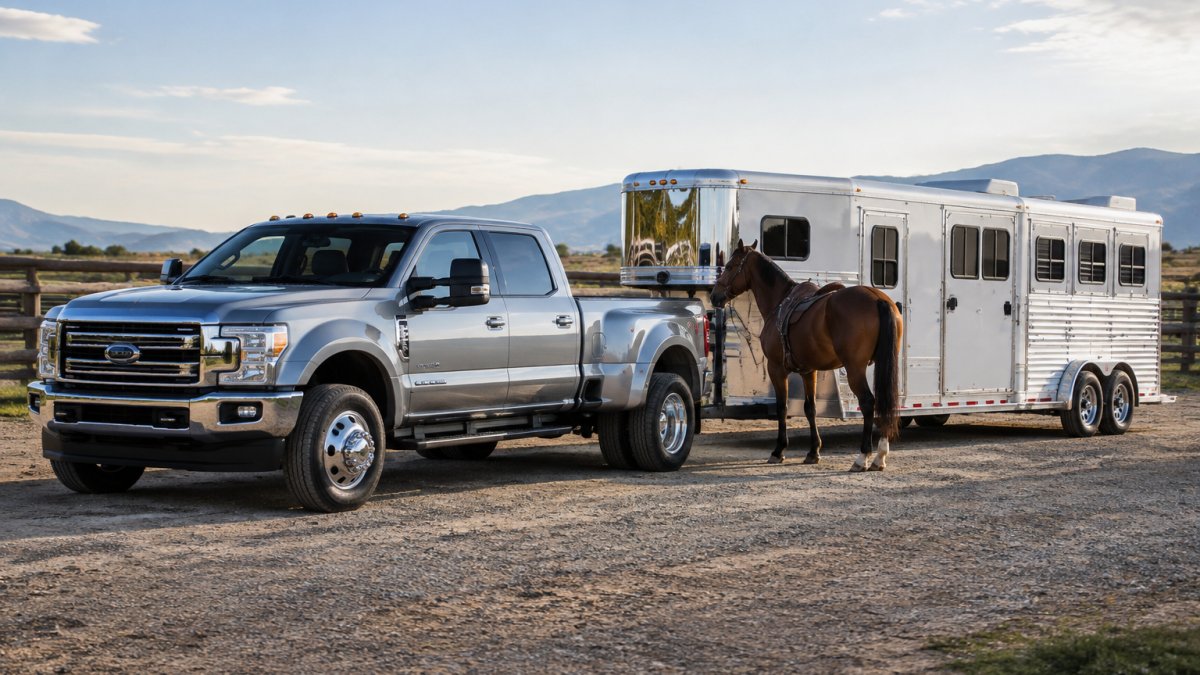
Gooseneck and fifth-wheel trailers shift weight over the rear axle, so rear-axle ratings and payload capacity matter more than raw tow rating. The Ford F-250 Super Duty is a solid heavy-duty starting point, and the F-350 Super Duty carries higher rear-axle weight ratings, which matters for gooseneck hauling.
For the largest loads, the F-450 Super Duty and Ram 3500 enter the picture.
Watch out: buying a one-ton truck for a light two-horse trailer gives you a stiff, bouncy empty ride and no real benefit. Match the class to the load.
Used Trucks for Hauling Horse Trailers: What to Inspect
Used trucks for hauling horse trailers need a harder look than a daily driver, because towing wear shows up in specific places. Check these before you buy:
- Transmission fluid color and smell, plus service records
- Brake pads, rotors, and trailer brake controller wiring
- Cooling system condition, including the transmission cooler
- Hitch receiver, gooseneck ball, and frame for cracks or rust
- Rear suspension, springs, and axle seals
- Tire load rating and even wear across the tread
- Rust on the frame and cab corners, especially on older trucks
Ask for the original window sticker or a VIN lookup to confirm the truck's actual tow rating and axle ratio. Sellers often quote the best-case rating for the model, not the truck in front of you.
Custom Truck Builds for Horse Trailers: When Stock Falls Short
A custom build can make sense when you want one truck for towing, daily driving, and long highway days. SportChassis trucks are built as complete vehicles.
For a deeper look at the differences, read our comparison of custom Sport Chassis versus stock trucks for heavy towing, and our guide on how to plan custom truck builds for horse trailers covers the planning stage.
See the SportChassis Inventory at Extreme Sport Chassis
Matching a truck to your trailer is a numbers exercise, and the numbers should leave room to spare. If you want a truck that tows all week and still feels refined on the drive to work, that's exactly what we build our business around. Our team helps you match the truck to your trailer, your horses, and your budget.
Browse Sport Chassis for sale at Extreme Sport Chassis and find the truck that fits your haul.
Frequently Asked Questions
What size truck do I need to pull a horse trailer?
It depends on the loaded trailer weight, not the trailer type alone. Assuming every half-ton truck suits a two-horse trailer oversimplifies the decision. A pickup in the half-ton class can suit a bumper-pull trailer, while heavier needs point toward a heavy-duty truck. For hauling horse trailers with larger breeds or multi-horse gooseneck setups, a three-quarter-ton or one-ton truck gives more payload and rear-axle capacity. Always check the specific truck's door-jamb ratings against your loaded trailer, tongue weight, and hitch rating.
Is a half-ton truck enough for a two-horse trailer?
Sometimes, but not automatically. The best truck for towing a two-horse trailer is one whose gross vehicle weight rating, payload capacity, and hitch rating all cover your actual load. Add the trailer, two horses, tack, water, and passengers, then compare that total to the truck's ratings. If the numbers are close, step up to a three-quarter-ton truck for a safety margin.
Should I choose a pickup or a medium-duty truck for a horse trailer?
A pickup works for many bumper-pull and gooseneck horse trailers when properly configured. Medium-duty and custom luxury haulers make sense when you tow often, carry multi-horse loads, or want one vehicle that handles both the haul and the daily commute. A pickup is not always necessary, so evaluate the truck-trailer combination as a whole. Test drive both, compare payload and pin weight, and factor in stopping distance and stability.
How do I check whether my truck can safely tow my loaded horse trailer?
Start with the driver's door jamb sticker for gross vehicle weight rating and payload capacity, then check the owner's manual for gross combined weight rating and maximum towing capacity for your exact configuration. Weigh the loaded trailer at a public scale, including horses, tack, and water. Confirm tongue weight or pin weight stays within the hitch rating, and that a brake controller and trailer brakes work properly. Leave a safety margin rather than towing at the limit.
Are used trucks for hauling horse trailers a good value?
Yes, if you inspect the parts that matter for towing. Check the rear-axle rating, transmission condition, cooling system, suspension, and brake controller wiring. Look for a weight-distributing hitch on bumper-pull setups and confirm the gooseneck or fifth-wheel hitch is rated for your pin weight. Review maintenance records for fluid changes and brake service. A used three-quarter-ton or one-ton truck often costs less than a new half-ton while offering more capacity for hauling horse trailers.
Your trailer and horses have specific weights, and your truck should have the ratings to match them with margin to spare. Extreme Sport Chassis offers high-quality SportChassis trucks, custom solutions tailored to your needs, and expert advice on vehicle selection. Get started with Extreme Sport Chassis and put a truck built for hauling horse trailers in your driveway.